
compared2what? wrote:I love vampires! I've always loved vampires! I mean in film and print, not in life, metaphorically or otherwise. Mark Kermode's wrong, though. Vampire narratives are always about sex. Including the ones that not only aren't remotely about sex in any way, but are emphatically about death, or isolation, or love, or power, or powerlessness, or the exploitation of the usefully idiotic bourgeoisie by the aristocratic ruling class, or the inherently socially traumatic nature of going to high school in Southern California, or....As a matter of fact, even some of the ones that are about sex aren't really about sex. Like Carmilla, for example.
Wait, wait... you do talk fast. So, are they all about sex except the ones that are about sex? Am I reading you right? Or did you mean to say they are all, without exception, about sex?
I will also squeal "Buffy!" in girlish glee, despite being not a girl, or typically very gleeful.
I'll continue as if you had said they all are about sex, even though I'm not totally convinced of that yet - I definitely think 'I Am Legend', probably the first "scientific" vampire story, was actually about masturbation. Yes. Yes it was.
I'm sure quite a number of the early, and even recent, vampire tales are all about beating the censors. For a lesbian love story like Carmilla to have "come out" in 1872 is simply amazing. A revolutionary act! And he never woulda got away with it if it weren't for them pesky, and convenient, vampires.
Of course, Dracula as a whole just reeks of polymorphous perversity.
Then there's the original I Am Legend in 1954(!), about a man who's lost his wife, the only women he ever did or could love (and the whole world went with her - a big viral plague, but I think it's a metaphor for his personal desolation) and now he's holed up alone in a barricaded house with only memories to sustain him. But each night the vampires come, and, having intelligence, they try to lure him out with sex by flaunting their non-decayed bodies. And he is tempted. But remains faithful to the memory of his wife.
He never gives in to his need for physical intimacy (being bitten) by these other women (there are men lurking on the periphery ready to attack if he comes out - but the women get all the description) ... until in the day time, while they sleep, he can go out and relieve his frustration by blasting them from a safe distance with his "gun" - in their beds.
They are not aware of his presence at this time. He's still irreducibly alone
There's symbolism there. It's a shame all the good stuff was taken out for the film.
I suppose it wouldn't really have worked. "Will Smith Stars in the Most Metaphorically Masturbatory Epic Of The Year!"
It's about sexual guilt too, of course. I suppose that can just be taken as part and parcel of the sex.
Unless they're the originally pre-Christian, unromanticized, Slavic folklore-type narratives that were drawn upon by both Bram Stoker and the earlier, less influential vampire-story-writers of the romantic and/or gothic (and/ or other unnamed and less formal, counter-Enlightenment, return-of-the-repressed Western-aesthetic/cultural) movements in which the basic vampire mythos and ethos as we know it unto this very day were developed.
I like the Slavic ones, with their bloated appearance and red faces. They're like drunks. I disagree that they were entirely non-sexual, though - like I said, they come into people's beds and "lay upon them"... the most commonly used word was "pressing." And they were often returning dead spouses - sexual guilt about the continued physical longing for a dead partner, maybe, creating a "demon" to absolve the sufferer of blame.
In which case, who knows what the fuck they're about? Apart from people whose ancient pagan traditions and beliefs happened to have been fully assimilated by Christianity over the course of eight or nine centuries during which their cultural views of sex and death and so on were entirely uninfluenced by any of the hang-ups commonly attached to those things irrespective of religion by pretty much every member of all the Western societies that evolved primarily under the auspices of Roman Catholicism...
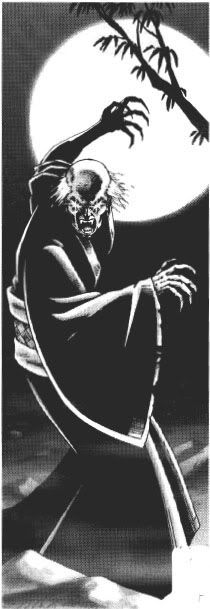
Now here's a thought. I'll have to cut this short, but just imagine the medieval vampire, Nosferatu-style, with his heavy black clothes, long white fingers, aloof and distant attitude, apparent superior knowledge of the supernatural, etc.... He's seen as a creeping, floating, haunting presence that knows all about your bad thoughts and bad deeds, and judges them. He is a literal "drain" on the community, pressing down on them, sucking the very life-force of the poor, demanding they sacrifice their very lives and souls for his sustenance...
He's a Catholic priest, isn't he?

I haven't thought this right through yet, but could the old vampire myths have sprung from veiled anti-clericalism - beating the censors again?
Not sure, but it's sumfing to fink abaht, innit?





 It comes with the whole "demonic" aspect. If demons weren't sexy, no one could be seduced... even if they're child demons.