Theresa Duncan Unplugged

Moderators: Elvis, DrVolin, Jeff

Theresa Duncan Unplugged

Postby treppenwitz » Thu Jul 24, 2008 10:43 pm

There is ample evidence that Theresa Duncan was involved with situationist ideology. Duncan and Blake were friends and collaborators with Ian Svenonius. Blake's final unfinished project was a collaboration with Malcolm McLaren. Et cetera. If links and connections aren't good enough for ya, how about her own words:
As regular readers will remember, Wit is a psychogeographical warrior


I hold that the only way to properly understand Theresa Duncan's blog - the key, if you will - is through an understanding of the 20th century avant-garde philosophy stretching from surrealism and dadaism through the Situationist International and into more recent permutations such as Neoism and the Luther Blissett Project. Everything else is just sound and fury, signifying nothing. And don't bother googling - you won't find the answers there.

The central idea of the situationists is the importance of games and of play.

In the 1960 “Situationist Manifesto”, Debord et al write: “So what really is the situation? It's the realization of a better game” (Source)


The Situation: this concept, central to the SI, was defined in the first issue of their journal as "A moment of life concretely and deliberately constructed by the collective organization of a unitary ambiance and a game of events." (Source)


'Our action or behavior, linked with other desirable aspects of a revolution in mores, can be briefly defined as the invention of games of an essentially new type. The most general goal must be to expand the nonmediocre part of life, to reduce the empty moments of life as much as possible... The situationist game is distinguished from the classic notion of games by its radical negation of the element of competition and of separation from everyday life. On the other hand, it is not distinct from a moral choice, since it implies taking a stand in favor of what will bring about the future reign of freedom and play.' --Guy Debord 1957 (Source)


Each person will feel the joy of color, of music; architectonic airs of colored gasses, hot walls of infrareds that provide eternal springtime - we will make it so that man plays from the cradle to the grave, and even death will be nothing but a game. (Source)


It would be pointless and futile, if not insulting, to compress decades of critical philosophy into a soundbite, but I'll attempt it anyway.

The situationists sought to turn everyone into artists, with the art they produce being "situations" (that is, "a game of events"), to create a "total game" wherein the artists (that is, "everybody") are now in full control of their lives. By these means the situationists sought to destroy what they called The Spectacle, which is a sort of virtual reality of total capitalist control that has superimposed itself over true reality. (If you are familiar with Philip K Dick, think of the Black Iron Prison.)

If you look here, under "Basic design principles of Alternate Reality Games" you'll see:
Real life as a medium. The game used players' lives as a platform. ... Participants were constantly on the lookout for clues embedded in everyday life.


The situationists wanted to incorporate games and play into every aspect of everyday life. ARGs incorporate everyday life into games. (This is what dreamsend got superficially right, but fundamentally wrong.)

The situationists main strategies for accomplishing their goal were the dérive and psychogeography (central to their idea of unitary urbanism), and détournement - "the reuse of preexisting artistic elements in a new ensemble". I'll leave it to the interested reader to connect the dots with the "plagiarism" accusations.

The "psychogeography" blog post linked above is in fact a quote and link to an article entitled "THE RALPH RUMNEY'S REVENGE AND OTHER SCAMS: An account on the psychogeographical warfare in Venice during the 1995 Biennial Exhibition of Contemporary Arts" by Luther Blissett.

Luther Blissett is both the story-teller and the Mac Guffin of a board-game played on the stage of the world. It is essentially a grim theory of conspiracy which mostly makes use of techniques tested in the Mail Art (Ethe)real Network (MULTIPLE NAMES, 'Add, Pass & Return' creations etc.) in order to manipulate and overturn the language of myths, the archetypes of the popular culture as well as the neo-pagan religious experience. It is a sort of lucid shamanism ... (Source)


The philosophy of Luther Blissett

Luther Blissett is best comprehensible if one takes the viewpoint that life is basically a game.

A game consists of "freedoms", "barriers" and "purposes".

A person playing a game is involved in it to a greater or lesser degree. He looses control over the game the more it becomes compulsive for him. He gets involved with interferences of others, agreements and non-agreements, with creation and destruction, he gets entangled in games not of his own, and in the end he winds up rather being a piece or a broken piece than a player.

One of the most important objectives of Luther Blissett is the rehabilitation of a person as "player" and the rehabilitation of his "spirit of play". (Source)


It is clear, both from the link and her blog in toto, that Theresa Duncan was very familiar with these strategies.

We have to get beyond the bounds of information, into a realm where it overturns and shatters into pieces... *détourner* and go deep into paranoia, push their game up to an extreme paradox, sell distorted stories off to the press bounty-killers... Turn the very logic of the system into our war strategy: media homoeopathy (Source)


"Go deeper into paranoia..."

Another important concept throughout the 20th century avant-garde is the idea of intentionally inducing paranoid states of mind.

Salvador Dali developed the concept of Critical Paranoia for establishing a creative state of self-induced psychosis (Source)


Dali's importance for Surrealism was that he invented his own 'psycho technique', a method he called 'critical paranoia'. He deliberately cultivated delusions similar to those of paranoiacs in the cause of wresting hallucinatory images from his conscious mind. (Source)


He chose to place himself at the disposal of experience, and he chose to place his experience at the mercy of a conscience conceived as an instrument of mystery and a key to the enigma of being. Transports, ecstasies, orgies - what is the secret? The poet, says Baudelaire, is a decipherer, a Kabbalist of reality, a decoder. Ordinary life, if it is not a message in code, a system of symbols for something else, is unacceptable. It must be a cryptogram; it can’t be what it seems. The poet’s task is to decode the incomprehensible obvious. His life becomes a deliberately constructed paranoia, as Rimbaud, Breton, Artaud were to say generations later. (Source)


In fact, the practice of psychogeography itself is inherently paranoid: it is all about discovering hidden connections.

Of course in England a few psychogeographical groups operating in cities like London, Manchester & Nottingham have kept the spirit alive & over the years they have developed a unique framework that combines radical politics, the occult & the composition of the urban environment into a coherent & slightly paranoid ideology.

Psychogeography can be practised as artistic practise, as a branch of urban exploration, as a form of social commentary & often it's all these thing at the same time. Psychogeography also has it's own paranoia in the sense that it believe that any environment can induce behaviour. (Source)


In each book, this crew of “unaccredited genealogists” moves through the landscape, “on the hunt for workable metaphors”, inducing in each other a paranoid intensity of connection, and linking apparently trivial details into compelling patterns.

The connections are so quickly made – connection is at work, too, in the aural overlaps of colonies/mandalas/madness/circles/axis – that the language becomes unstable, and thereby performs its own subject, which is paranoia, nervousness, mania. (Source)


And back to the LBP - remember above, "to manipulate and overturn the language of myths"...

a whole bunch of comrades have focused their attention on an even newer form of that old problem. They committed themselves to a practical exploration of mythologies, in order to understand whether a non-alienating, libertarian deconstruction, re-use and manipulation of myths was possible or not. (Source)


You still need the dots connected? Theresa Duncan was working within an artistic philosophy that included deliberately inducing paranoia, and creating and manipulating personal myths... Figure it out yourself.

The upshot of all this is very simple: as the LBP's actions and Negativland's Helter Stupid album had previously exposed the "unreliable process of cannibalization that passes for 'news'", the post-Duncan period has exposed the moral and intellectual (to say nothing of artistic) bankruptcy of the conspiracy subculture and the entire blogosphere, especially viz. the ritual desecration of a woman's Exquisite Corpse in the furtherance of personal agendas.

The answer, my friends, is not concealed in Theresa Duncan's blog, but it is our hearts, and in our mirrors.

"I shouted out 'Who killed the Kennedys?' When after all It was you and me."

Fraternally yours,
Luther Blissett
treppenwitz
 
Posts: 6
Joined: Wed Jul 23, 2008 9:52 pm
Blog: View Blog (0)

Postby seemslikeadream » Thu Jul 24, 2008 10:50 pm

Image


http://www.youtube.com/watch?v=2SvdWk8zRrI

http://www.youtube.com/watch?v=yN8TcEBhxY0

http://www.youtube.com/watch?v=R78CYo2a0Qg


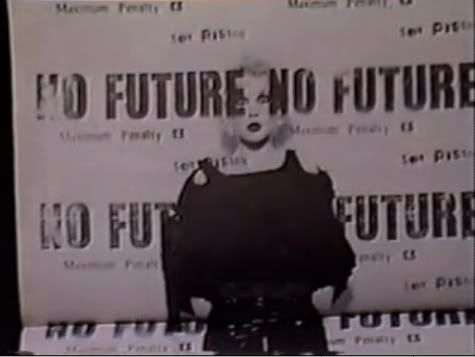
On the Passage of a few People through a Rather Brief Moment in Time: The Situationist International 1956-1972

A video documentary combining exhibition footage of the Situationist International exhibitions with film footage of the 1968 Paris student uprising, and graffiti and slogans based on the ideas of Guy Debord (one of the foremost spokesmen of the Situationist International movement). Also includes commentary by leading art critics Greil Marcus, Thomas Levine, and artists Malcolm Mac Laren and Jamie Reid. Branka Bogdanov, Director and producer. NTSC-VHS 22 min. 1989
User avatar
seemslikeadream
 
Posts: 32090
Joined: Wed Apr 27, 2005 11:28 pm
Location: into the black
Blog: View Blog (83)

Re: Theresa Duncan Unplugged

Postby Jeff » Thu Jul 24, 2008 11:07 pm

When I started reading your post I wasn't sure where you were going with this, but by the end I was grateful for the ride.

And this:

treppenwitz wrote: the post-Duncan period has exposed the moral and intellectual (to say nothing of artistic) bankruptcy of the conspiracy subculture and the entire blogosphere, especially viz. the ritual desecration of a woman's Exquisite Corpse in the furtherance of personal agendas.


ought to be repeated, bolded and underscored.
User avatar
Jeff
Site Admin
 
Posts: 11134
Joined: Fri Oct 20, 2000 8:01 pm
Blog: View Blog (0)

Postby chiggerbit » Thu Jul 24, 2008 11:17 pm

Fraternally yours,
Luther Blissett



??????
chiggerbit
 
Posts: 8594
Joined: Tue May 10, 2005 12:23 pm
Blog: View Blog (0)

Re: Theresa Duncan Unplugged

Postby Et in Arcadia ego » Thu Jul 24, 2008 11:49 pm

Jeff wrote:When I started reading your post I wasn't sure where you were going with this, but by the end I was grateful for the ride.

And this:

treppenwitz wrote: the post-Duncan period has exposed the moral and intellectual (to say nothing of artistic) bankruptcy of the conspiracy subculture and the entire blogosphere, especially viz. the ritual desecration of a woman's Exquisite Corpse in the furtherance of personal agendas.


ought to be repeated, bolded and underscored.


Agreed 100%
"but I do know that you should remove my full name from your sig. Dig?" - Unnamed, Super Scary Persun, bbrrrrr....
User avatar
Et in Arcadia ego
 
Posts: 4104
Joined: Fri Dec 02, 2005 5:06 pm
Location: The Void
Blog: View Blog (0)

Postby chiggerbit » Thu Jul 24, 2008 11:55 pm

Wiki, re Exquisite Corpse, the game:

http://en.wikipedia.org/wiki/Exquisite_corpse

Exquisite corpse (also known as "exquisite cadaver" or "rotating corpse") is a method by which a collection of words or images is collectively assembled, the result being known as the exquisite corpse or cadavre exquis in French. Each collaborator adds to a composition in sequence, either by following a rule (e.g. "The adjective noun adverb verb the adjective noun") or by being allowed to see the end of what the previous person contributed.....


....In the Montreal World Film Festival of 2006, a group of ten film directors, scriptwriters and professional musicians took the concept to a new level with the fusion of the art of film-making and song-writing: Cadavre Exquis première édition.

The stage production Hedwig and the Angry Inch and its film adaptation heavily utilize the exquisite corpse format as a symbol. Near the end of the play/film, as the already bizarre story reaches its most surreal point, Hedwig begins reminiscing about all the relationships and events in her life that have made her feel "cut...up into parts", with pieces going to various important people. The following song asserts that now, however, she has "sewn up" or reconstructed herself, recovered, and become whole, though as a patchwork of sorts ("tornado body and a hand grenade head, and the legs are two lovers entwined"). The lyrics actually contain the term "exquisite corpse", which is also its title.
Last edited by chiggerbit on Fri Jul 25, 2008 12:19 am, edited 2 times in total.
chiggerbit
 
Posts: 8594
Joined: Tue May 10, 2005 12:23 pm
Blog: View Blog (0)

Postby chiggerbit » Fri Jul 25, 2008 12:02 am

From Wiki:

L'esprit d'escalier (literally, stairway wit) is a French term used in English that describes the predicament of thinking of the right comeback too late. Originally a witticism of Denis Diderot, the French encyclopedist, in his Paradoxe sur le Comédien.

The phrase can be used to describe a riposte to an insult, or any witty, clever remark that comes to mind too late to be useful—when one is on the "staircase" leaving the scene. A seldom-used English translation exists: "staircase wit". [1]

This expression dates from a time when the word esprit, which now means "spirit" or "mind", meant more commonly "wit" (though mot d'esprit still means "witticism").

The concept formed the core of a storyline for an episode of the 1990s NBC sitcom Seinfeld.


[edit] Treppenwitz
Sometimes Treppenwitz, the concept's German translation, is used to express the same idea. The nearest English expression would be "being wise after the event".

As in the French counterpart above, treppenwitz literally means 'the wit [or 'joke'] of the stairs'. It is the striking reply that crosses one's mind belatedly when already leaving, on the stairs. People are often angry because they did not have the fitting answer directly during a conversation.

The German term is old, but it was made popular by W. Lewis Hertslet who published his book in 1882 entitled 'Treppenwitz der Weltgeschichte'. In that book, he writes: "Like to a petitioner who is just leaving after an audience, a piquant, striking words occurs to history almost always delayed." (German language Source)
chiggerbit
 
Posts: 8594
Joined: Tue May 10, 2005 12:23 pm
Blog: View Blog (0)

Postby chiggerbit » Fri Jul 25, 2008 12:40 am

Here's what I got when I googled "lucid shamanism", in cache:

http://tinyurl.com/6f3ccq


Here's the stuff we found when you searched for "lucid shamanism"


By pure coincidence, I found this on the home page for that cache, which was posted just today:
http://everything2.com/node/124

Pseudocide (idea) by Heitah
Faking one's death is called "pseudocide." The term is considered a Neologism. Also known as "going off the grid," as well as a British expression "doing a Reggie Perrin." Drowning is the most popular form of deception, due to the easily explained absence of body. Oddly enough pseudocide is nearly always committed by men.

Disappearing is one thing, announcing your death is another.
People do it for varying reasons, to start a new life, to collect on insurance claims,...


Of course, I'm sure it's totally unrelated to all of this Duncan game.
chiggerbit
 
Posts: 8594
Joined: Tue May 10, 2005 12:23 pm
Blog: View Blog (0)

Postby chiggerbit » Fri Jul 25, 2008 1:56 am

détourner: to hijack
chiggerbit
 
Posts: 8594
Joined: Tue May 10, 2005 12:23 pm
Blog: View Blog (0)

Postby chiggerbit » Fri Jul 25, 2008 2:07 am

http://en.wikipedia.org/wiki/Paranoid_fiction

Paranoid fiction is a modern genre of literature that explores the subjective nature of reality and how it can be manipulated by forces in power. These forces can be external, such as a totalitarian government, or they can be internal, such as a character's mental illness or refusal to accept the harshness of the world he is in.

Unlike speculative fiction, paranoid fiction is written in a way so as to imply that the story may only be a delusion of the characters, instead of treating it as an alternate history or an in-fiction universe.....


.....Philip K. Dick is most frequently viewed as the forefather of the modern paranoid fiction genre. His works were literally born out of paranoia and hallucination; he had sudden visions of places he'd never been to and events he'd never witnessed, possibly from temporal lobe epilepsy or an overly active imagination. These visions were so vivid that Dick put them down on paper, never failing to classify them as only "speculative thought," and thus outside the boundary of conventional thought.....


....At its most basic, paranoid fiction refers specifically to works about speculations and possible conspiracies by people in power, told by an unreliable narrator.[3] However, the most popular type of paranoid fiction has proved to be one in which the universe appears on the surface to be definite and real, but upon closer inspection, to actually be deceptive and deliberately misleading. In these works, there are either questions raised as to the realness of the world the characters are living in, or a distinction made between a fantasy world and its reality.

Paranoid fiction often overlaps with many other genres, most commonly dystopian fiction, science fiction, and film noir, sharing many of its main themes and literary devices. Generally, however, paranoid fiction avoids explicitly defined themes and concrete motifs in favor of allegories and ambiguous symbolism to emphasize the dreamlike and unreal nature of the characters' world.[5] For example, a purely dystopian work typically explores the mechanisms and motives of the totalitarian state to keep its people under control, whereas one of paranoid fiction would concentrate more on the effects of the state on its inhabitants' mental and emotional well-being, and its implications on the decadent condition of society. George Orwell's Nineteen Eighty-Four can be viewed as a balance of the two, depicting the Party as crushing free will through a strictly defined language and constant monitoring, but also through psychological torture and the distorting of people's viewpoints on what is true and what is false.

To further increase their "magic realism," works of paranoid fiction often employ common devices and archetypes from other genres, including a detective-solving structure, plot twists, or philosophical themes, to create a surrealistic tone and an atmosphere of fear and dread. Plots also tend to be fanciful and occasionally futuristic to emphasize their inherent absurdity and imaginativeness, but also maintain some measure of realism to comment on how apparently unrealistic stories can, in fact, be (often frighteningly) closer to real life than one might think at first glance.[5]

Sometimes paranoid fiction will strongly imply, and occasionally admit outright, that its constructed world is a lie or an illusion. In this case, the plot will center on the main character's struggle between the physical and spiritual; i.e. the actual world they are in, versus the world they want to see and believe in. Here, the cause of the fantasy is the protagonist's internal desires, doubts, and suspicions. Such works tend to be more introspective and focused on the individual, than on a community or regime....
chiggerbit
 
Posts: 8594
Joined: Tue May 10, 2005 12:23 pm
Blog: View Blog (0)

Re: Theresa Duncan Unplugged

Postby justdrew » Fri Jul 25, 2008 3:43 am

Jeff wrote:When I started reading your post I wasn't sure where you were going with this, but by the end I was grateful for the ride.

And this:

treppenwitz wrote: the post-Duncan period has exposed the moral and intellectual (to say nothing of artistic) bankruptcy of the conspiracy subculture and the entire blogosphere, especially viz. the ritual desecration of a woman's Exquisite Corpse in the furtherance of personal agendas.


ought to be repeated, bolded and underscored.


I'm not really sure what witz Means by that, can you be?

witz et all - Just what do you think the response of the "conspiracy subculture" and "entire blogosphere" should have been?
User avatar
justdrew
 
Posts: 11966
Joined: Tue May 24, 2005 7:57 pm
Location: unknown
Blog: View Blog (11)

Postby elfismiles » Fri Jul 25, 2008 11:11 am

Thank you Treppenwitz ... with this month marking the anniversary of Theresa's foundational blog posts and her cesasation of blogging, she and Blake have been much on my mind.

http://theresalduncan.typepad.com/witos ... index.html
http://theresalduncan.typepad.com/witos ... 07/page/6/

Treppenwitz: The striking reply that crosses one's mind belatedly when already leaving, on the stairs. People are often angry because they did not have the fitting answer directly during a conversation.

The German term is old, but it was made popular by W. Lewis Hertslet who published his book in 1882 entitled 'Treppenwitz der Weltgeschichte'. In that book, he writes: "Like to a petitioner who is just leaving after an audience, a piquant, striking words occurs to history almost always delayed." (German language Source)

http://www.cis.uni-muenchen.de/people/E ... trepp.html
http://bogieworks.blogs.com/treppenwitz ... deo-a.html


The Wit of the Staircase
From the French phrase 'esprit d'escalier,' literally, it means 'the wit of the staircase', and usually refers to the perfect witty response you think up after the conversation or argument is ended. "Esprit d'escalier," she replied. "Esprit d'escalier. The answer you cannot make, the pattern you cannot complete till aterwards it suddenly comes to you when it is too late."

http://theresalduncan.typepad.com/witostaircase/


Treppenwitz
Definition from Wiktionary, a free dictionary
Jump to: navigation, search

German

Etymology
Treppen "stairs" + Witz "wit", lit. transl. (calque) of Fr. l'esprit de l'escalier.

Noun
Treppenwitz m. (genitive Treppenwitzes, plural Treppenwitze)

"Staircase wit", a devastating rejoinder thought of only after leaving the scene of the debate.

http://en.wiktionary.org/wiki/Treppenwitz


L'esprit d'escalier (literally, stairway wit) is a French term used in English that describes the predicament of thinking of the right comeback too late. Originally a witticism of Denis Diderot, the French encyclopedist, in his Paradoxe sur le Comédien.

The phrase can be used to describe a riposte to an insult, or any witty, clever remark that comes to mind too late to be useful—when one is on the "staircase" leaving the scene. A seldom-used English translation exists: "staircase wit". [1]

This expression dates from a time when the word esprit, which now means "spirit" or "mind", meant more commonly "wit" (though mot d'esprit still means "witticism").

The concept formed the core of a storyline for an episode of the 1990s NBC sitcom Seinfeld.

Treppenwitz
Sometimes Treppenwitz, the concept's German translation, is used to express the same idea. The nearest English expression would be "being wise after the event".

As in the French counterpart above, treppenwitz literally means 'the wit [or 'joke'] of the stairs'. It is the striking reply that crosses one's mind belatedly when already leaving, on the stairs. People are often angry because they did not have the fitting answer directly during a conversation.

The German term is old, but it was made popular by W. Lewis Hertslet who published his book in 1882 entitled 'Treppenwitz der Weltgeschichte'. In that book, he writes: "Like to a petitioner who is just leaving after an audience, a piquant, striking words occurs to history almost always delayed." (German language Source)

References
^ http://en.wiktionary.org/wiki/staircase_wit
Retrieved from "http://en.wikipedia.org/wiki/L%27esprit_de_l%27escalier"

http://en.wikipedia.org/wiki/L'esprit_de_l'escalier


Luther Blissett (nom de plume)
From Wikipedia, the free encyclopedia
Jump to: navigation, search

Image
Likeness of Luther Blissett, from wumingfoundation.comLuther Blissett is a multiple-use name, an "open reputation" informally adopted and shared by hundreds of artists and social activists all over Europe and South America since Summer 1994.

On the Usenet, the first reference to the Luther Blissett Project appeared on 7 November 1994. It was a trumped-up report on alleged uses of the multiple name all over the world, and - albeit written in a somewhat clumsy English - it was posted by a "Luther Blissett" from the University of Missouri-Columbia.

For reasons that remain unknown, the name was borrowed from a 1980s British football player of Afro-Caribbean origins. In Italy, between 1994 and 1999, the so-called Luther Blissett Project (an organized network within the open community sharing the "Luther Blissett" identity) became an extremely popular phenomenon, managing to create a legend, the reputation of a folk hero. This Robin Hood of the information age waged a guerrilla warfare on the cultural industry, ran unorthodox solidarity campaigns for victims of censorship and repression and - above all - played elaborate media pranks as a form of art, always claiming responsibility and explaining what bugs they had exploited to plant a fake story. Blissett was active also in other countries, especially in Spain and Germany. December 1999 marked the end of the LBP's Five Year Plan. All the "veterans" committed a symbolic Seppuku.

http://en.wikipedia.org/wiki/Luther_Blissett_(nom_de_plume)
User avatar
elfismiles
 
Posts: 8512
Joined: Fri Aug 11, 2006 6:46 pm
Blog: View Blog (4)

Postby chiggerbit » Fri Jul 25, 2008 11:32 am

in order to manipulate and overturn the language of myths, the archetypes of the popular culture as well as the neo-pagan religious experience.

I'm still trying to figure out if Duncan was actually religious (Catholic?). Was overtturning neo-paganism part of her agenda?

elfsmiles, you lost me--the purpose of re-gurgitating, for the most part, my Treppenwitz post was.....?
chiggerbit
 
Posts: 8594
Joined: Tue May 10, 2005 12:23 pm
Blog: View Blog (0)

Postby sunny » Fri Jul 25, 2008 11:37 am

Utterly fascinating.

A person playing a game is involved in it to a greater or lesser degree. He looses control over the game the more it becomes compulsive for him. He gets involved with interferences of others, agreements and non-agreements, with creation and destruction, he gets entangled in games not of his own, and in the end he winds up rather being a piece or a broken piece than a player.


Exactly what happened to Dreamsend.

I wonder if he's evolved?
Choose love
sunny
 
Posts: 5220
Joined: Mon May 16, 2005 10:18 pm
Location: Alabama
Blog: View Blog (1)

Postby elfismiles » Fri Jul 25, 2008 11:41 am

chiggerbit wrote:elfsmiles, you lost me--the purpose of re-gurgitating, for the most part, my Treppenwitz post was.....?


Rushing has made my stomach upset ...

1. to surge or rush back, as liquids, gases, undigested food, etc.
–verb (used with object) 2. to cause to surge or rush back; vomit.
3. to give back or repeat, esp. something not fully understood or assimilated: to regurgitate the teacher's lectures on the exam.


... which is to say ... I didn't see it.
User avatar
elfismiles
 
Posts: 8512
Joined: Fri Aug 11, 2006 6:46 pm
Blog: View Blog (4)

Next

Return to General Discussion

Who is online

Users browsing this forum: No registered users and 19 guests