Banning RT is a Soviet — not western — tactic
Free speech and access to information gives Europe a competitive advantage
In 1922, the USSR established the General Directorate for the Protection of State Secrets in the Press (known as Glavlit) to weed out “propaganda against the Soviet Union” that “stirred up public opinion through false information”. The mission of Glavlit reflected Lenin’s view that the press was “no less dangerous than bombs and machine-guns” and that its proper role was to serve as “a collective propagandist [and] agitator” for Bolshevik ideas.
Like Lenin and Stalin before him, Vladimir Putin is obsessed with controlling the public sphere through censorship and propaganda. In 2022 Glavlit has been replaced by the media regulator Roskomnadzor, which, in the past week alone has ordered media outlets to only use official Russian sources and banned words like “invasion” and “war” when reporting on events in Ukraine. It has also blocked online access to media outlets for “disseminating false information”, a crime which has seen at least ten media outlets facing legal sanctions. In addition, Russia is seeking to spread its propaganda globally through outlets such as state sponsored broadcasters like RT and Sputnik.
Faced with this development the European Commission is moving forward with an EU-wide total ban on RT and Sputnik — both online and offline — while a similar move in the UK has been proposed by Labour leader Keir Starmer. According to Ursula Van Der Leyen the EU´s “unprecedented” initiative is needed to “ban [Russian] toxic and harmful disinformation in Europe”.
While sanctions targeting Russian oligarchs and the kleptocratic infrastructure of Russia’s economy should be expanded, European democracies should be careful not to copy and paste Putin’s censorship tactics. Once the centralised command and control of media freedom in 27 democracies based on inherently vague definitions of “propaganda” and “disinformation” has been established, the danger is that it will almost inevitably be used to target other forms of undesirable information in the future.
Western democracies even have a compelling historical precedent to rely on when it comes to defending free speech. In 1975 the Helsinki Final Act was signed by thirty-five countries under the auspices of the Conference on Security and Cooperation in Europe. The Helsinki Act’s primary ambition was to ease Cold War tensions, but Western democracies — led by the European Community — persuaded the Soviet Bloc to accept the inclusion of human rights provisions. The agreement called for improving the “Circulation of, Access to, and Exchange of Information”. The human rights language did not appeal to communist states who were already jamming the radio signals of Western radio stations like BBC and Radio Free Europe. In language eerily similar to that now used by European democracies, Soviet officials emphasised that they would never tolerate “the dissemination of…racism, fascism, the cult of violence, hostility among peoples and false slanderous propaganda.” But ultimately, the Soviet bloc swallowed the human rights concessions, which they viewed as little more than empty rhetoric.
Yet through newspaper reports, word of mouth, underground “samizdat” publishers, and Western radio broadcasts, Central and Eastern Europeans quickly learned about the new rights that their governments had just solemnly promised to respect. And among the rights guaranteed by the Helsinki Final Act, perhaps none was more important than freedom of expression. Hence, the creation of the “Helsinki Effect” — where international norms substantially affect domestic political change — contributed to ending the Cold War as such.
The abject failure of Russian propaganda, the resilience of the Western public sphere and the historical lessons of the Helsinki Final Act, should convince European democracies that free speech and access to information is a competitive advantage, not a disability, when it comes to fighting information wars against Kremlin.
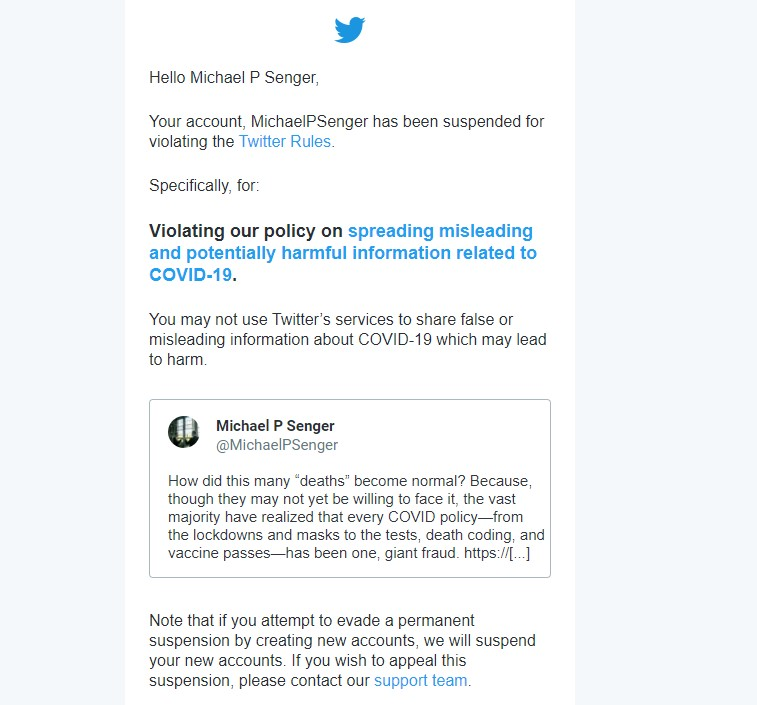
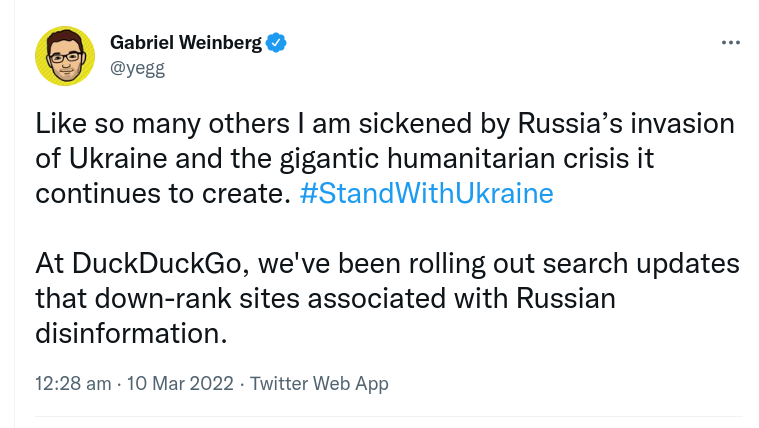
Suppression/Propaganda in Media
Moderators: Elvis, DrVolin, Jeff
-
Grizzly

- Posts: 5150
- Joined: Wed Oct 26, 2011 4:15 pm
- spambot: no
Re: Suppression/Propaganda in Media
Spotify Purges Dissident Voices In Latest Censorship Escalation
https://caitlinjohnstone.com/2022/03/03 ... scalation/
https://caitlinjohnstone.com/2022/03/03 ... scalation/
“The more we do to you, the less you seem to believe we are doing it.”
― Joseph mengele
― Joseph mengele
-
RocketMan

- Posts: 2813
- Joined: Mon Mar 10, 2008 7:02 am
- Location: By the rivers dark
Re: Suppression/Propaganda in Media
Correction to previous: RT and Sputnik websites appear to function (I do have VPN). So "only" the YouTube channels are down, and Sputnik's Telegram channel for some reason functions. I think Telegram is popular with Eastern European/Slavic people so I guess they made a compromise and took down RT but for some reason let Sputnik continue.
-I don't like hoodlums.
-That's just a word, Marlowe. We have that kind of world. Two wars gave it to us and we are going to keep it.
-That's just a word, Marlowe. We have that kind of world. Two wars gave it to us and we are going to keep it.
-
alloneword

- Posts: 902
- Joined: Mon Jan 22, 2007 9:19 am
- Location: UK
Re: Suppression/Propaganda in Media
Russia passes law to criminalise the spreading of "knowingly false information".
Or as Fox put it (in a way that is likely 'knowingly false'):
Of course, here in the UK, we only imprison journalists for propagating real news.
So a law against the propagation of "knowingly false information" criminalises the output of the BBC, CNN, CBS News, Bloomberg, ABC News and CBC to the point where they feel it's safer to leave Russia altogether.
'Nuff said.
Or as Fox put it (in a way that is likely 'knowingly false'):
https://www.foxnews.com/us/putin-fake-n ... alists-warRussian President Vladimir Putin signed into law Friday legislation that would punish journalists with prison time for publishing news that contradicts officials' statements about Moscow's war in Ukraine.
Under the new law, reporters face up to 15 years in prison if they report what authorities deem as false reports about the military. The legislation was passed by both chambers of the Russian parliament.
Tim Davie, the director-general for the BBC, said the law criminalizes independent journalism and said the media outlet has suspended the work of its journalists and staff in Russia.
Of course, here in the UK, we only imprison journalists for propagating real news.
So a law against the propagation of "knowingly false information" criminalises the output of the BBC, CNN, CBS News, Bloomberg, ABC News and CBC to the point where they feel it's safer to leave Russia altogether.
'Nuff said.
-
MacCruiskeen
- Posts: 10558
- Joined: Thu Nov 16, 2006 6:47 pm
Re: Suppression/Propaganda in Media
^^ Welcome to the Mendocracy, the New Normal. If you're in the business of telling lies abroad, just sneak out when you're caught and pretend it never happened. Carry on telling lies at home, because that's what you're paid for and nobody is powerful enough to stop you. You'll get a knighthood eventually.
"Ich kann gar nicht so viel fressen, wie ich kotzen möchte." - Max Liebermann,, Berlin, 1933
"Science is the belief in the ignorance of experts." - Richard Feynman, NYC, 1966
TESTDEMIC ➝ "CASE"DEMIC
"Science is the belief in the ignorance of experts." - Richard Feynman, NYC, 1966
TESTDEMIC ➝ "CASE"DEMIC
-
MacCruiskeen
- Posts: 10558
- Joined: Thu Nov 16, 2006 6:47 pm
Re: Suppression/Propaganda in Media
@BLK_DJASPORA 1 Std.
“Google has accepted the request and has removed all RT and sputniknews from its search engine. EVERYTHING. It doesn't matter if the content was about the current conflict or something else, RT and Sputniknews no longer exist on Google”
https://twitter.com/BLK_DJASPORA/status ... 0547964932
"Ich kann gar nicht so viel fressen, wie ich kotzen möchte." - Max Liebermann,, Berlin, 1933
"Science is the belief in the ignorance of experts." - Richard Feynman, NYC, 1966
TESTDEMIC ➝ "CASE"DEMIC
"Science is the belief in the ignorance of experts." - Richard Feynman, NYC, 1966
TESTDEMIC ➝ "CASE"DEMIC
-
alloneword
- Posts: 902
- Joined: Mon Jan 22, 2007 9:19 am
- Location: UK
Re: Suppression/Propaganda in Media
The BBC's Middle East Editor, Jeremy Bowen:
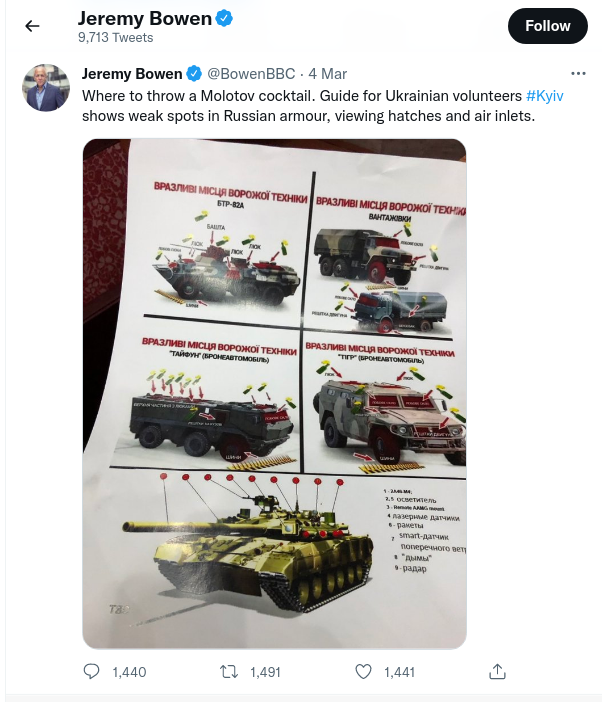
https://nitter.net/BowenBBC/status/1499668674940133378
The first comment:
https://nitter.net/BowenBBC/status/1499668674940133378
The first comment:
And the next comment is a short video showing 'A mixture of BBC coverage of Molotov cocktails in Ukraine and fire kites in Palestine'.Just thinking how public opinion would respond if this was written in Arabic and instead of molotov cocktails, it was 'rocks and stones'
-
MacCruiskeen
- Posts: 10558
- Joined: Thu Nov 16, 2006 6:47 pm
Re: Suppression/Propaganda in Media
^^ The BBC, "the world's trusted news source", is busily destroying what's left of its reputation. While the chaps talk tough, the ladies wax soulful. From Lyse Doucet's novelette:
I added the last line....But in this beleaguered capital, the bells still ring out, reassuringly on the hour, in the magnificent golden-domed St Michael’s Cathedral.
It knows a thing or two about war.
Sacked down through the centuries, demolished by the Soviet authorities in the 1930s during Stalin’s rule.
But it rose again.
And now in 2022 Ukrainians draw strength from this history, their faith in themselves and their future.
Around the world many now ask how high a price will Ukraine have to pay: Why not give up now to avoid this searing pain as the Russian vice squeezes ever tighter?
And that may seem from afar to be a sensible solution.
But Ukraine’s writer Andrey Kurkov reminds us that as Russia’s troops move into Ukrainian cities they are being met, not by white flags of surrender, but by the yellow and blue standard of Ukraine – still standing, for now, in this second week of a war we’re all watching.
Hello, room service, send me up another bottle of vodka.
17:31, 5 Mar
Lyse Doucet, Chief International Correspondent, Kyiv
https://www.bbc.com/news/live/world-eur ... 634/page/2

"Ich kann gar nicht so viel fressen, wie ich kotzen möchte." - Max Liebermann,, Berlin, 1933
"Science is the belief in the ignorance of experts." - Richard Feynman, NYC, 1966
TESTDEMIC ➝ "CASE"DEMIC
"Science is the belief in the ignorance of experts." - Richard Feynman, NYC, 1966
TESTDEMIC ➝ "CASE"DEMIC
-
MacCruiskeen
- Posts: 10558
- Joined: Thu Nov 16, 2006 6:47 pm
Re: Suppression/Propaganda in Media
"Ich kann gar nicht so viel fressen, wie ich kotzen möchte." - Max Liebermann,, Berlin, 1933
"Science is the belief in the ignorance of experts." - Richard Feynman, NYC, 1966
TESTDEMIC ➝ "CASE"DEMIC
"Science is the belief in the ignorance of experts." - Richard Feynman, NYC, 1966
TESTDEMIC ➝ "CASE"DEMIC
-
alloneword
- Posts: 902
- Joined: Mon Jan 22, 2007 9:19 am
- Location: UK
Re: Suppression/Propaganda in Media
Telegram has now been pressured into blocking access to RT in Europe. As Telegram appears to take a users location as being the country with which their phone network provider is associated, there isn't (yet) a way to circumvent this censorship.
I'm actually glad they did this, as it takes the pressure off them a little. With their new(ish) 'auto translate' feature rolled out on the Android and IOS platforms, you can get a decent translation of pretty much everything into English with a tap of the screen. This alone has probably done more to circumvent censorship than RT could ever hope to achieve, opening up a whole other world of Russian social media chatter to us.
Moldova appears to have also caved and is now blocking RT. Long live Serbia!
- - -
This, from yesterday:
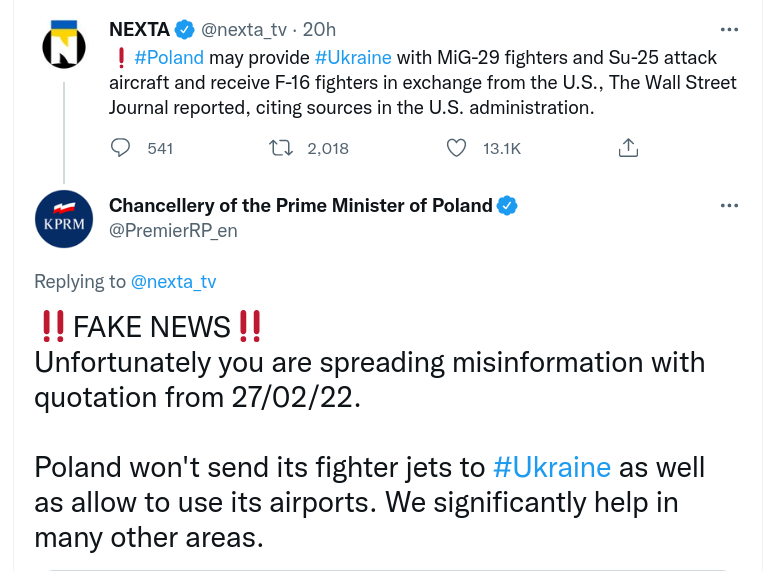
https://twitter.com/PremierRP_en/status ... _-pdIpAAAA
- - -
Also, this handy tool for doing 'reverse image searches': https://tineye.com/
Very useful if you come across an image and wonder where/when it's originally from (seems to work a lot better than Google).
I'm actually glad they did this, as it takes the pressure off them a little. With their new(ish) 'auto translate' feature rolled out on the Android and IOS platforms, you can get a decent translation of pretty much everything into English with a tap of the screen. This alone has probably done more to circumvent censorship than RT could ever hope to achieve, opening up a whole other world of Russian social media chatter to us.
Moldova appears to have also caved and is now blocking RT. Long live Serbia!
- - -
This, from yesterday:
https://twitter.com/PremierRP_en/status ... _-pdIpAAAA
- - -
Also, this handy tool for doing 'reverse image searches': https://tineye.com/
Very useful if you come across an image and wonder where/when it's originally from (seems to work a lot better than Google).
-
alloneword
- Posts: 902
- Joined: Mon Jan 22, 2007 9:19 am
- Location: UK
Re: Suppression/Propaganda in Media
Our mainstream news has been full of stories regarding 'the Russian rocket strike at Vinnytsia airport in central Ukraine on Sunday', e.g:
As Interfax-Ukraine (not exactly 'Putin apologists') tell us:
I couldn't find any reference in the coverage that mentions that (it would appear) the last civilian passenger flight to or from 'Vinnytsia Airport' was in 2019, or that it was (until Sunday) the base of the 456th transport aviation brigade of the Ukrainian Air Force.Telegraph wrote:A barrage of Russian missiles destroyed a civilian airport in Vinnytsia on Sunday, said Volodymy Zelensky, the Ukrainian president. He pointed out that the area in central Ukraine was some distance from the Russian and Belarussian borders and has so far escaped heavy attack.
As Interfax-Ukraine (not exactly 'Putin apologists') tell us:
Russian troops fired at the Vinnytsia airport and a military unit in Havryshivka.
"The Vinnytsia airport and the military unit in Havryshivka were fired upon with rockets. As a result of the explosions, a fire broke out," the State Service for Special Communications and Information Protection said on the Telegram channel.
Currently, the State Emergency Service is working on the spot.
"As a result of missile fire in Havryshivka region, a military facility was hit. Currently, the State Emergency Service is working on the spot," Head of Vinnytsia Regional Military Administration Serhiy Borzov said in a video message on the Telegram channel.
-
alloneword
- Posts: 902
- Joined: Mon Jan 22, 2007 9:19 am
- Location: UK
Re: Suppression/Propaganda in Media
On a lighter note:
https://rutube.ru/video/32d3ba700b1ec4d ... 364b78779/
(Celebrating 15 years of RT).
Fuck 'em. We can just watch 'Press TV' instead. That way we get to hear about Yemen and Palestine, too.
https://rutube.ru/video/32d3ba700b1ec4d ... 364b78779/
(Celebrating 15 years of RT).
Fuck 'em. We can just watch 'Press TV' instead. That way we get to hear about Yemen and Palestine, too.
-
Belligerent Savant

- Posts: 5614
- Joined: Mon Oct 05, 2009 11:58 pm
- Location: North Atlantic.
-
alloneword
- Posts: 902
- Joined: Mon Jan 22, 2007 9:19 am
- Location: UK
-
MacCruiskeen
- Posts: 10558
- Joined: Thu Nov 16, 2006 6:47 pm
Re: Suppression/Propaganda in Media
The Memory Hole is one of the most useful weapons in the propagandists' arsenal.

https://pbs.twimg.com/media/FNhS13SXMAE ... name=large
https://pbs.twimg.com/media/FNhS13SXMAE ... name=large
"Ich kann gar nicht so viel fressen, wie ich kotzen möchte." - Max Liebermann,, Berlin, 1933
"Science is the belief in the ignorance of experts." - Richard Feynman, NYC, 1966
TESTDEMIC ➝ "CASE"DEMIC
"Science is the belief in the ignorance of experts." - Richard Feynman, NYC, 1966
TESTDEMIC ➝ "CASE"DEMIC