Re: The Russian Conspiracy as RI subject
Posted: Thu Mar 23, 2017 4:04 pm
want to post this snippet here to draw attention to the comment made by andropov in '77. it adds of layer of complexity to typical cold war narratives, and plus i'm not so sure it's that widely known:
http://www.e-flux.com/journal/27/67999/ ... -violence/
e-flux Journal #27 - September 2011
Franco “Bifo” Berardi
Time, Acceleration, and Violence
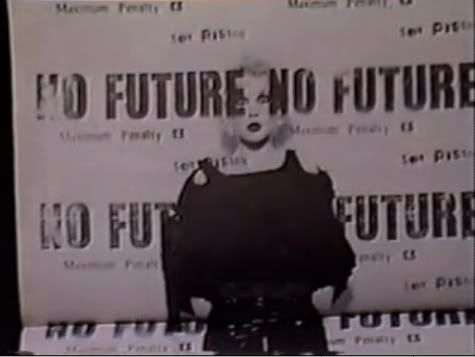
"So what happened to the century that trusted in the future? If we look to the year 1977, we find it to be especially important in the history of mankind. It is the year Charlie Chaplin died, a moment that that, to my mind, marked the end of a possibility for a kind of a humane and gentle modernity. It is the end of a contradictory, controversial perception of time in modernity, the time of the horrible machine, invading and destroying my life. That same year, Uri Andropov, former head of the KGB, wrote a letter to Leonid Brezhnev, explaining that the USSR had five years left to close the gap with the United States in the field of information technology, or all would be lost. We all know how that story ended. But 1977 is also the year that, in a small Silicon Valley lab, Steve Jobs and Steve Wozniak created user-friendly interfaces bearing the Apple trademark . . . The future is over. Don’t think about your future, because you don’t have one. In a sense, this cry ('no future') was the final premonition of the end of the modern age, of the end of industrial capitalism and the beginning of a new age of total violence. If capitalism is to go on in the history of mankind, then the history of mankind must become the place of total violence, because only the violence of competition can decide the value of time."
the entire piece by berardi is so excellent, in a somewhat oblique or indirect way to the predicament of the state and its subjects at this particular moment
http://www.e-flux.com/journal/27/67999/ ... -violence/
e-flux Journal #27 - September 2011
Franco “Bifo” Berardi
Time, Acceleration, and Violence
"So what happened to the century that trusted in the future? If we look to the year 1977, we find it to be especially important in the history of mankind. It is the year Charlie Chaplin died, a moment that that, to my mind, marked the end of a possibility for a kind of a humane and gentle modernity. It is the end of a contradictory, controversial perception of time in modernity, the time of the horrible machine, invading and destroying my life. That same year, Uri Andropov, former head of the KGB, wrote a letter to Leonid Brezhnev, explaining that the USSR had five years left to close the gap with the United States in the field of information technology, or all would be lost. We all know how that story ended. But 1977 is also the year that, in a small Silicon Valley lab, Steve Jobs and Steve Wozniak created user-friendly interfaces bearing the Apple trademark . . . The future is over. Don’t think about your future, because you don’t have one. In a sense, this cry ('no future') was the final premonition of the end of the modern age, of the end of industrial capitalism and the beginning of a new age of total violence. If capitalism is to go on in the history of mankind, then the history of mankind must become the place of total violence, because only the violence of competition can decide the value of time."
the entire piece by berardi is so excellent, in a somewhat oblique or indirect way to the predicament of the state and its subjects at this particular moment