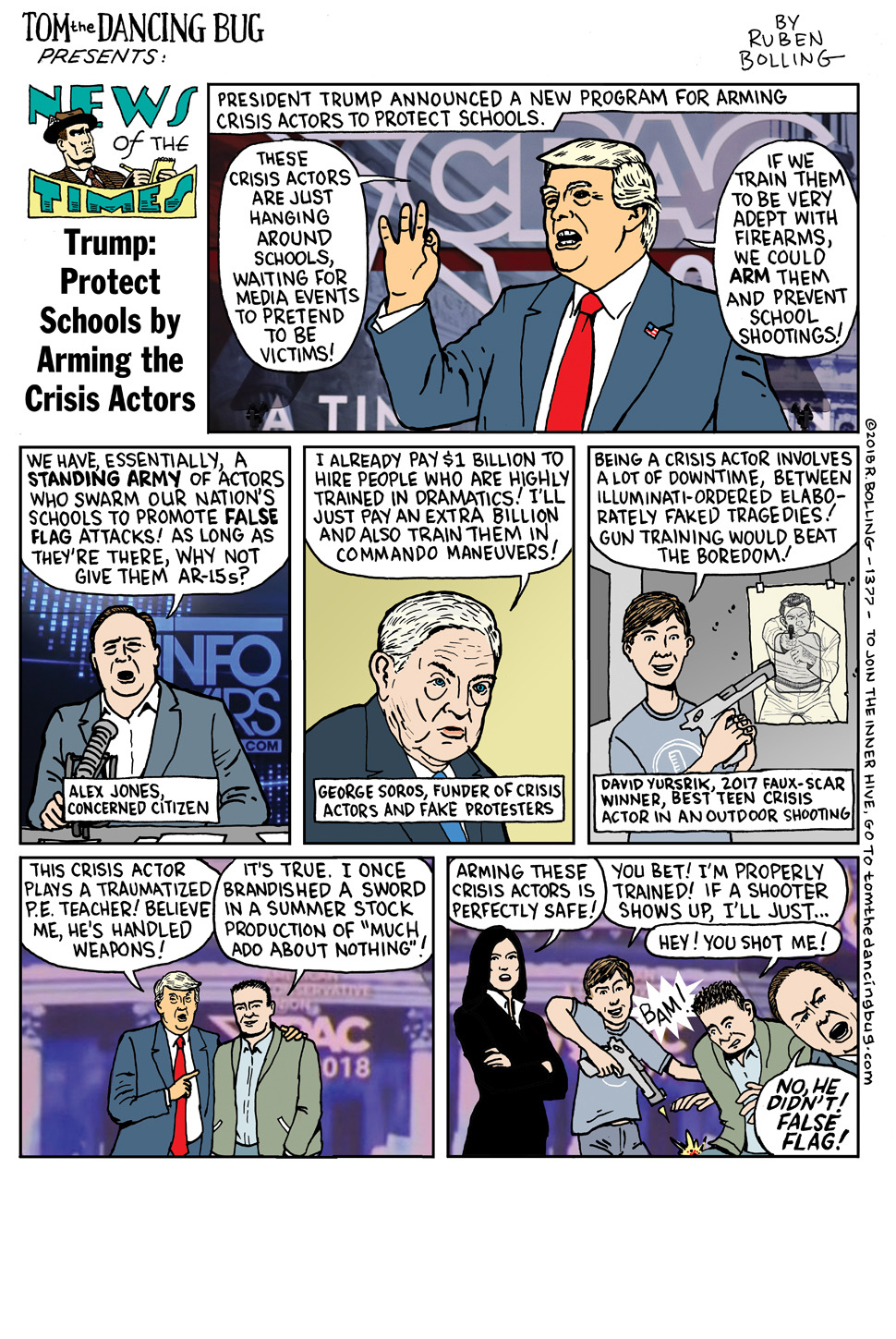
Where the ‘Crisis Actor’ Conspiracy Theory Comes From
Victims of the Parkland shooting have been baselessly accused of being paid actors, thanks to a series of conspiracy theory bloggers after the Sandy Hook massacre.
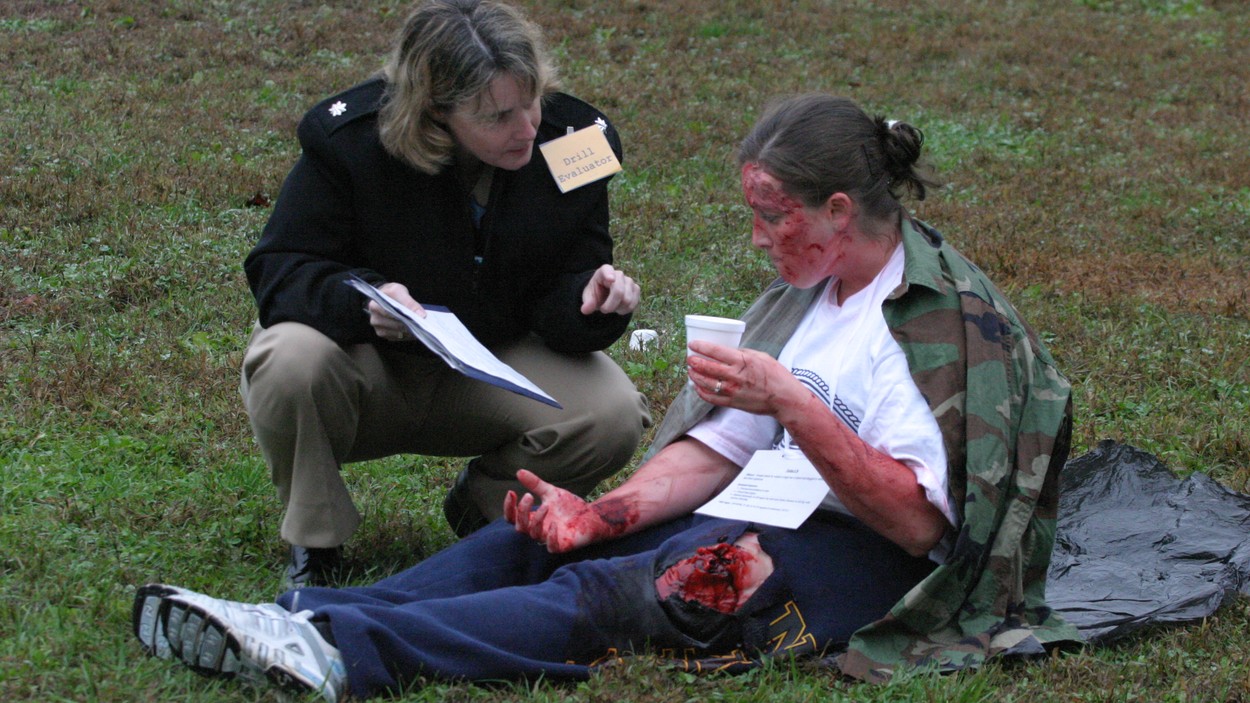 Role players at a mass casualty training exercise at the National Naval Medical Center in Maryland.
James Tracy, who was a professor of communications at Florida Atlantic University at the time, published a series of articles “analyzing the Newtown narrative” on his Memory Hole Blog. His first post on December 20, six days after the shooting, claimed to examine “emerging contradictions” between the official story and interviews with people on the scene.
In his first post about Newtown, Tracy does not specifically suggest that Newtown victims were “actors,” but a commenter on that post does: “To broadcast gunshots and mayhem over the intercom system would be a very effective and easy way of pulling off a false flag operation where there actually was no shooter, it adds a bit of zing to what is essentially a drill and allows the actors and children to actually relate what they heard and did with a bit more reality.”
By January 1, Tracy was espousing this theory in a post with the URL “sandy-hook-the-illusion-of-tragedy.” In that post, Tracy asked: “Was Sandy Hook a Relocated Emergency Drill” that was staffed by “Itinerant ‘Crisis Actors?’”
Before Newtown, conspiracy theorists had often said that events like the 9/11 attacks were inside government jobs or false flag operations, but I can find little evidence of anyone suggesting that national tragedies were outright faked.
“After such a harrowing event why are select would-be family members and students lingering in the area and repeatedly offering themselves for interviews? A possible reason is that they are trained actors working under the direction of state and federal authorities and in coordination with cable and broadcast network talent to provide tailor-made crisis acting that realistically drives home the event’s tragic features,” he wrote.
Crucially, Tracy specifically cites VisionBox’s Crisis Actors press release and suggests that maybe a government agency hired the company for the job. The group—and its “Crisis Actors” have become patient zero for the larger crisis acting conspiracy. Its old website,
http://www.crisisactors.org and the photos posted there are often used by conspiracy theorists in memes created to “prove” a theory. The site no longer exists, but VisionBox is still an active theater troupe.
"We have not worked in this area for many years so have no information at all," a spokesperson for VisionBox responded to an email I sent asking the company to discuss the origins of the project and how it felt to have the project seen as part of a conspiracy.
While Tracy popularized the Sandy Hook crisis actors narrative, he did not invent it. On Christmas, someone calling themselves Travis J. Walker published a post called “The Newest Reality TV Hit Show: Sandy Hook” on a WordPress blog called The R.A.W.W. Scoop. The post notes that “the families seemed to be acting out of character for people who were supposed to be grieving a lost loved one. They seemed to be reciting a rehearsed script in these interviews.” The post goes on to outline the broad script that Tracy would later popularize, and also cites VisionBox’s Crisis Actors: “If an agency like this exists that almost guarantees realism, is it that far out of the realm of possibility to think that this could be staged?”
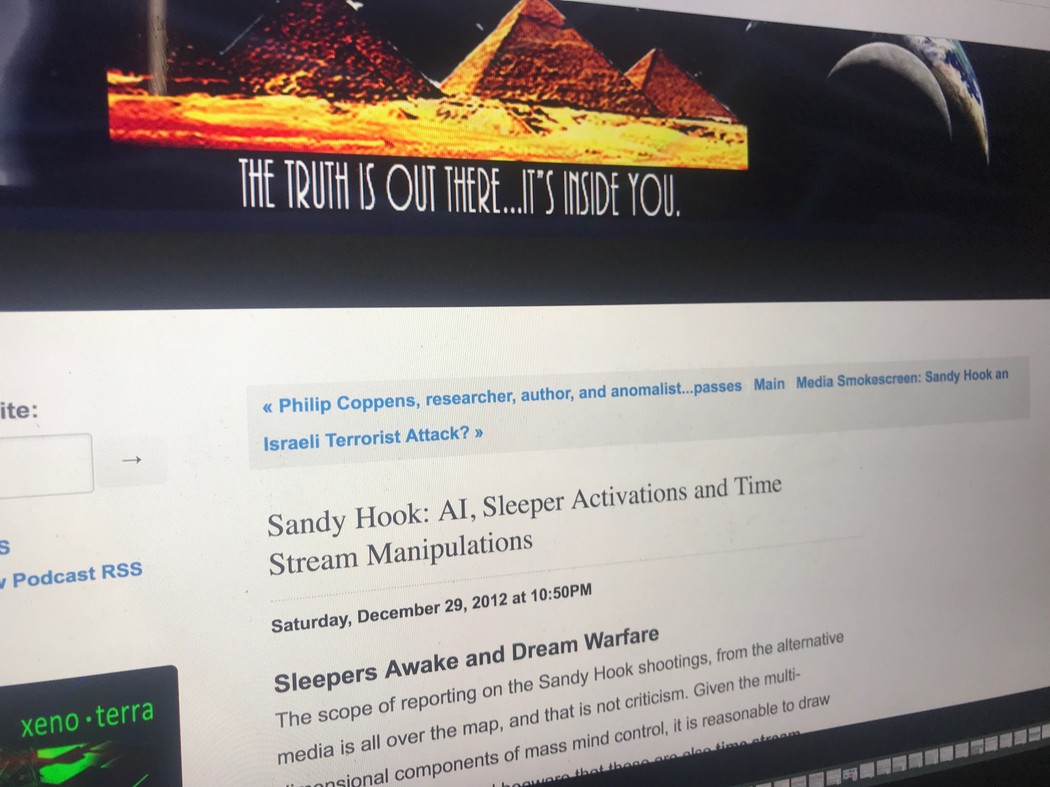
The plot was further suggested in a truly bizarre post December 29 called “Sandy Hook: AI, Sleeper Activations and Time Stream Manipulations” on a site called OffPlanetRadio (now OffPlanetMedia), which suggests both time manipulation at Aurora, Colorado massacre and Sandy Hook and a “triangulation of Sandy Hook in three separate, seemingly unrelated high profile events:” Aurora, Sandy Hook, and Hurricane Sandy. The post said that Sandy Hook was a drill alongside the suggestion that “the
time stream aspect is more compelling given the interval of 7 days prior to the December 21, 2012 solstice. Ritual blood-letting is the cabal's method of intoning power prior to key time events, especially when coordinated to lunar and solar-based events.” The post ends with the suggestion that conspiracies are mapped using artificial intelligence and “time stream manipulations … such events are holographic in their execution, compartmentalized in commission, and thematically woven into
dream time neuropathy.”
A follow up post on December 31 called “Behind the Scenes (literally) at Sandy Hook: Crisis Actors,” drops the time and hologram stuff to focus on VisionBox.
What Tracy did, then, was signal boost a theory being espoused alongside those of mind control and time manipulation. Because Tracy was a university professor and not a random person on the internet, his theories were discussed by Alex Jones on InfoWars and gained traction in conspiracy circles. Fort Lauderdale’s Sun Sentinel was the first mainstream outlet to cover Tracy’s posts, forever enshrining “crisis actors” in our mainstream national lexicon; Tracy’s posts ultimately became a national controversy that was discussed by Anderson Cooper on CNN.