Re: Who Poisoned Alexander Litvinenko? Radioactive thallium
Posted: Tue Jan 27, 2015 8:47 am
”Alexander Litvinenko told Met police Putin ordered his murder, inquiry told
Public inquiry into his death told that Russian dissident said he had no doubt whatsoever it was done by the Russian secret service
Esther Addley
Tuesday 27 January 2015 05.45 EST
Alexander Litvinenko accused Vladimir Putin of personally ordering his murder in deathbed interviews with the Metropolitan police in the days before he died, the public inquiry into his killing has heard.
On the opening day of the inquiry into the Russian’s murder in 2006, the court was told that the dead man spoke to officers from his hospital bed, after being poisoned by radioactive polonium, in which he said he had “no doubt whatsoever that this was done by the Russian secret service”.
“Having knowledge of this system I know that this order about such a killing of a citizen of another country on its territory, especially if it is something to do with Great Britain, could have been given only by one person,” Litvinenko had told the investigating officer, Robin Tam QC, counsel to the inquiry, told the court on Tuesday.
Asked who that person was, said Tam, Litvinenko said: “That person is the president of the Russian Federation, Vladimir Putin. And of course, now while he is still president you won’t be able, because he is the president of a huge country crammed with nuclear chemical and bacteriological weapons.
“But I have no doubt whatsoever that as soon as the power changes in Russia, or when the first officer of the Russian secret services defects to the west … he will say that I have been poisoned by the Russian special services on Putin’s order.”
In another statement, Tam told the court, Litvinenko said he was “very upset that this criminal Putin sits at G8 as its chairman, at the same table as the [then] British prime minister, Tony Blair. Having sat this murderer next to themselves at the same table, western leaders have actually untied his hands to kill anyone, anywhere.”
Litvinenko died on 23 November 2006, 22 days after ingesting a fatal dose of the radioactive element polonium-210. “It is unusual,” Tam told the inquiry chair, Sir Robert Owen, “for a victim of murder, as Mr Litvinenko believed he might shortly be, to make a public statement about his own death.”
Litvinenko fled Russia in 2000 and was given political asylum in the UK; he became a British citizen a month before his death but remained a vocal critic of the Putin regime.
Reading from transcripts of his police interviews, Tam said the dead man told police: “Yes, they did try to kill me and possibly I will die. But I will die as a free person and my son and wife are free people.”
The court heard that Litvinenko told police he took his son Anatoly, then 12, to the Tower of London before he died, showed the boy the crown jewels and urged him to “defend this country in future until the last drop of your blood”.
The killing of Litvinenko gives rise to issues of the “utmost gravity” which have attracted “worldwide interest and concern”, Owen had earlier said. Opening the inquiry on Tuesday, more than eight years after the Russian dissident was murdered in London, he vowed to carry out “a full and independent inquiry into the circumstances of the death of Alexander Litvinenko”.
Owen has told previous hearings that he has seen evidence which amounts to a “prima facie case” that Litvinenko was murdered by the Russian state.
He would consider evidence relating to this allegation, he said, but confirmed that it would be heard in closed session because of security sensitivities.
The Crown Prosecution Service has sought to prosecute two Russian men, Andrei Lugovoi and Dmitry Kovtun, over Litvinenko’s murder, but Russia has refused their extradition. Litvinenko met with both men on the day of his poisoning in a London hotel. Both men deny involvement.
Owen said the two men would be invited to give evidence to the inquiry by video link.
The government originally refused Owen’s request for a public inquiry into the murder, admitting the decision was taken in part for fear of offending Russia. The dead man’s widow Marina Litvinenko challenged the decision in court and in February last year the high court ruled that Theresa May, the home secretary, should reconsider her decision.
The government announced in July that it would grant a public inquiry, under Owen, days after Russia annexed the Ukrainian region of Crimea.
The inquiry will hear evidence that Litvinenko had been ordered, as a senior officer in the FSB, to murder the Russian businessman Boris Berezovsky in 1997, Tam told the court on Tuesday. Litvinenko had disagreed with the order and warned Berezovsky of the plot, before protesting to the then head of the FSB, Vladimir Putin, in a meeting the following year, he said.
Litvinenko had spoken out publicly about corruption in the FSB in a press conference in 1998, after which he was subject to a number of attempted prosecutions.
Addressing Owen, Tam said: “You will need to consider whether Litvinenko’s sustained public attacks on the regime, on the FSB and on Mr Putin in particular, could have had any connection with his death.”
The inquiry is likely to hear evidence that the dead man was working for MI6 and for the Spanish security services at the time of his death, Tam told the court, though he said the British government had made clear that it would neither confirm nor deny the suggestion.
He said the chairman would need to consider whether this could have provided a motive for the killing, and would also be required to examine allegations that Berezovsky, a close friend and patron of Litvinenko in the years before his death, was behind the murder, as some have alleged.
Tam told the court that Litvinenko’s home had been firebombed in 2004, apparently by two Chechen men.
In addition, he said, the dead man’s friend, the Russian journalist Anna Politkovskaya, was murdered in October 2006, after which Litvinenko had made a statement at the Frontline Club in London in which he blamed Putin.
“Is it possible that there is any connection between this public statement and Mr Litvinenko’s poisoning less than two weeks later?
Alexander Litvinenko 'killed on third attempt'
Alexander Litvinenko's widow Marina recalls his final words to her
Who was Alexander Litvinenko?
Will inquiry find answers?
Two prior attempts to kill ex-Russian spy Alexander Litvinenko may have been made before he died from radiation poisoning in 2006, the BBC has learned.
The one-time officer with the successor to the KGB fled to the UK where he became a fierce critic of the Kremlin and worked for security service MI6.
A public inquiry into the London death of the 43-year-old opens on Tuesday.
Mr Litvinenko's widow says the inquiry will give people "a chance to understand who killed my husband".
Marina Litvinenko says he blamed the Kremlin as he lay dying in hospital but Russia denies any involvement.
Her lawyer has described his murder as "an act of state-sponsored nuclear terrorism on the streets of London".
BBC security correspondent Gordon Corera said investigators followed a radioactive trail across London and it suggested Mr Litvinenko was poisoned not on the first attempt, but on the third.
'Right decision'
The judge-led inquiry will be chaired by Sir Robert Owen, who was originally appointed as the coroner at Mr Litvinenko's inquest.
Sir Robert delayed the inquest and called for a public inquiry because the inquest could not consider sensitive evidence due to national security fears. The UK government resisted the move at first but later changed its stance last July, amid worsening relations with Moscow over the crisis in Ukraine.
Andrei Lugovoi and Dmitry Kovtun deny any involvement in the death
The death of Mr Litvinenko, who took British citizenship after his arrival in the UK, had already led to a clouding of relations between London and Moscow, with expulsions of diplomats from the embassies of both countries.
He died three weeks after becoming violently ill in November 2006 following a meeting with two former Russian agents at the Millennium Hotel in central London.
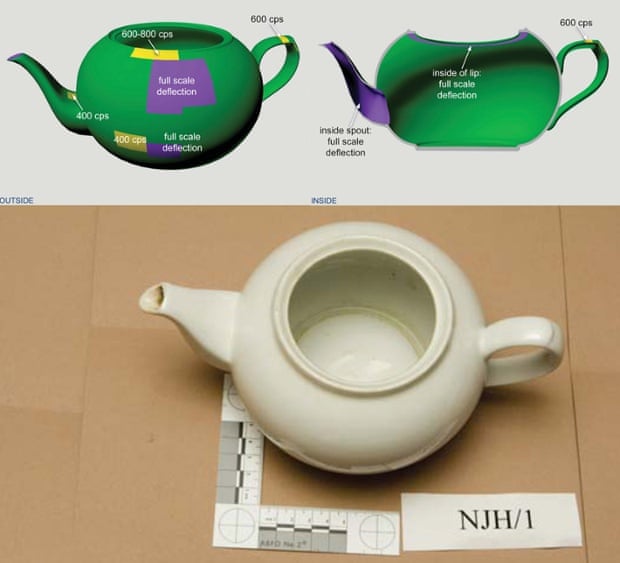
UK police say radioactive polonium-210 was administered in a cup of tea, and identified two suspects in the case - Andrei Lugovoi and Dmitry Kovtun. But the two Russians have disputed their claims.
The issue of who was ultimately responsible for the death will be considered at the inquiry at the Royal Courts of Justice.
Parts of the evidence will be heard in private, and Sir Robert says it is "inevitable" that some of his final report will stay secret for security reasons.
Mrs Litvinenko told the BBC she had accepted this and trusted Sir Robert to "make the right decision".
Alexander Litvinenko public inquiry: Live updates
Jan 27, 2015 12:42 By Anthony Bond
The former KGB agent died in November 2006 after drinking tea laced with radioactive polonium-210 while meeting two Russian men at the Millennium Hotel in London
12:42 pm
Litvinenko poisoned "not once but twice".
Tam has also revealed that evidence will reveal that Litvinenko was poisoned "not once but twice".
The first occasion, which had not been documented before, is thought to have taken place when Litvinenko met Lugovoi and Kovtun in London's Grosvenor Street.
This meeting took place on October 16, 2006 and Tam told the inquiry that Litvinenko was unwell shortly after the meeting.
Two weeks later on November 1, the former spy was again poisoned at the Millennium Hotel. He died on November 23.
12:24 pm
Radiation found at Arsenal's Emirates stadium after visit by suspect
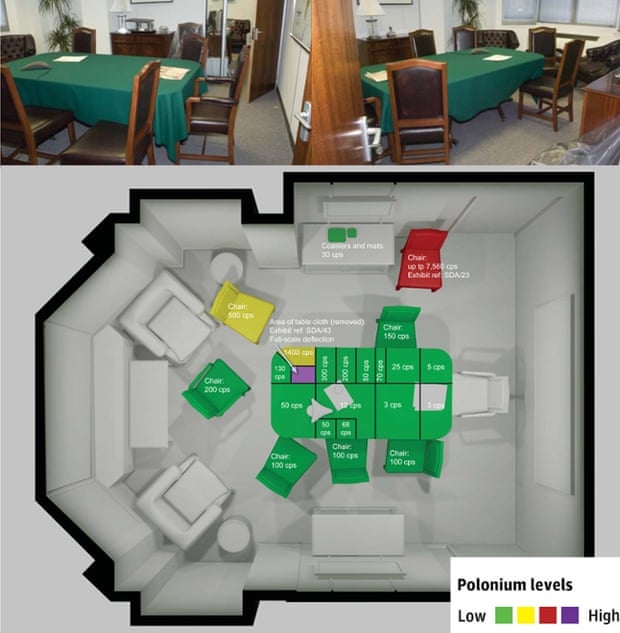
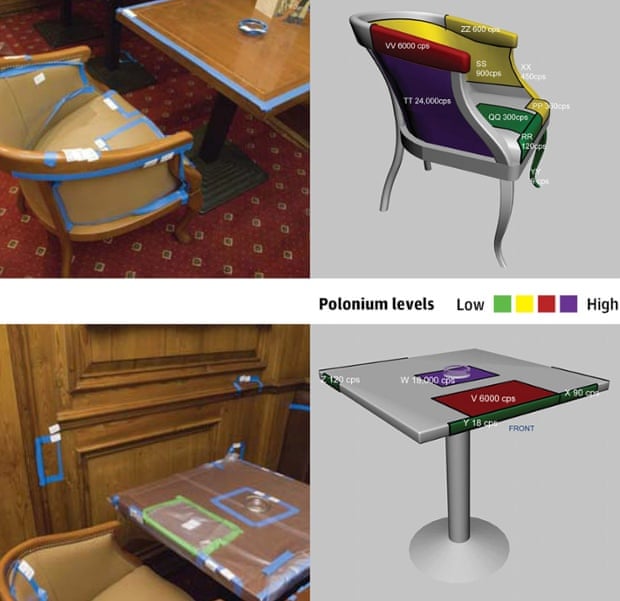
The inquiry is told that traces of radiation were found in a number of places across London which had been visited by the two suspects.
They met the former spy at a number of hotels, bars and restaurants. Lugovoi also went to Arsenal's Emirates stadium to watch their game against CSKA Moscow.
Scientists found traces of radiation at the Emirates stadium as well as aircraft, cars and hotels used by the pair.
12:14 pm
Two key suspects made regular visits to London before Litvinenko's death
The inquiry has heard that the two key suspects over the former spy's death are Andey Lugovoy and Dmitry Kovtun.
It is hoped that they will give evidence by videolink from Russia.
Tam is now going through a number of visits the pair made to London in 2006.
This included a series of meetings with Litvinenko.
12:01 pm
Litvinenko accused Putin over murder of Russian journalist Anna Politkovskaya
The hearing heard how Litvinenko was friends with murdered Russian journalist Anna Politkovskaya.
The reporter - who was known for her opposition to Putin - was murdered in October 2006.
Litvinenko later made a statement in London blaming the Russian president for her death.
Tam told the inquiry: “Is it possible that there is any connection between this public statement and Mr Litvinenko’s poisoning less than two weeks later?”
11:50 am
Litvinenko told police: "Vladimir Putin ordered my murder"
The former spy told detectives following his poisoning that he has "no doubt" that Vladimir Putin ordered his murder.
Tam read out police interviews with Litvinenko following his poisoning.
When asked who he thinks is responsible for ordering his death, Litvinenko said: "That person is the President of the Russian Federation, Vladimir Putin."
11:42 am
The hearing was also told that Litvinenko received threats while he was in London.
This included the firebombing of his house.
11:37 am
Litvinenko wrote books and articles on alleged FSB corruption
Tam tells the inquiry it will have to decide exactly how serious Russia viewed Litvinenko's opposition.
The hearing is also told how Litvinenko wrote books and articles on what he claimed was FSB corruption.
The inquiry will also look at whether Litvinenko worked for MI6 while in UK.
11:28 am
Litvinenko accused Russian President Vladimir Putin of being a paedophile
Tam tells the hearing that Litvinenko began political campaigning against the Putin regime.
This included accusing the Russian president of being a paedophile.
Mr Tam said to inquiry chair Mr Owen that he will have to consider whether Litvinenko's actions "could have had connection with his death".
11:17 am
Litvinenko became public whistleblower and campaigned against Putin
Tam tells the hearing that became disillusioned with his work with the Russian state security service the FSB.
He went on to become a public whistleblower who campaigned against Russian President Vladimir Putin.
He also converted to Islam at the end of his life.
11:03 am
Evidence of Russian state responsibility into death will be heard in private
Sir Robert Owen has revealed how sensitive evidence on the responsibility of the Russian state in Mr Litvinenko's death will be heard in private.
The inquiry will look to identity who is responsible for his death.
10:58 am
More than 70 witnesses will speak at hearing
Mr Tam is explaining who will give evidence in the coming weeks.
He says more than 70 witnesses will speak at the hearing.
This includes friends and family of Litvinenko, people he worked with before and after his death and medical staff who treated the former spy in his final weeks.
10:54 am
Lawyer: 'Thousands of members of public could have been at risk from radioactivity'
Robin Tam QC, counsel to the inquiry, said a public health alert was issued around the time of Mr Litvinenko's death when traces of polonium were found in "large numbers of places across London".
"Many thousands of members of the public, including British residents and visitors from overseas, might have been at risk from radioactivity," Mr Tam said.
10:50 am
Evidence shows is 'prima facie case' as to culpability of Russian state
Sir Robert Owen said sensitive evidence had established that there is a "prima facie case" as to the culpability of the Russian state in Mr Litvinenko's death.
Giving the background to the case, he said Home Secretary Theresa May wrote to him in July 2013 informing him that the Government had decided not to hold an inquiry at that time.
Sir Robert said: "Her decision was challenged in a claim brought on behalf of Marina and Anatoly Litvinenko (his wife and son) and was quashed in a judgment of the divisional court dated February 11 2014.
GettyAlexander LitvinenkoAlexander Litvinenko is pictured at the Intensive Care Unit of University College Hospital on November 20, 2006
"In short, I will carry out a full and independent inquiry into the circumstances of the death of Alexander Litvinenko."
Sir Robert said that both Lugovoi and Kovtun have been invited to give evidence to the inquiry via video link from Russia - an "invitation I hope will be accepted".
10:42 am
Robin Tam QC is currently speaking at the hearing.
He is one of the lawyers working on the inquiry.
Tam is currently discussing how the inquiry will work and how evidence will be heard.
10:30 am
Death of Russian spy is of 'upmost gravity'
The death of Russian spy Alexander Litvinenko gives rise to issues of "utmost gravity" including allegations of state-sponsored assassination, the chair of a public inquiry has said.
Opening the long-awaited hearing into British citizen Mr Litvinenko's death, Sir Robert Owen outlined some of the key issues and events.
Sir Robert said it has been noted that polonium - the deadly substance that was used to poison Mr Litvinenko in November 2006 - could have been used to "kill large numbers of people or spread general panic and hysteria among the public".
Mr Litvinenko, 43, died in hospital nearly three weeks after he had consumed tea laced with radioactive polonium-210 while meeting two Russian men - one a former KGB officer - at the Millennium Hotel in London's Grosvenor Square.
Former KGB bodyguard Andrei Lugovoi and Dmitri Kovtun have been identified as the prime suspects in the killing, but both deny any involvement and remain in Russia, the inquiry heard.
9:52 am
An inquiry will begin this morning into the death of Alexander Litvinenko.
The widow of the former KGB agent has said she hopes the inquiry into his death reveals the truth of his killing.
Marina Litvinenko, speaking as the inquiry was due to open today, said she was "fed up" with rumours that her tragic husband had smuggled radioactive material for a dirt bomb.
She said: "I know my husband was killed, I saw how it happened. It was a torture. He died a long 23 days in front of me, in front of his son, in front of his friends."
The long-awaited public inquiry is due to open today at the Royal Courts of Justice - eight years after the spy died in a poisoning. It is expected to last up to 10 weeks.
Mr Litvinenko died in November 2006 after drinking tea laced with radioactive polonium-210 while meeting two Russian men - one a former KGB officer - at the Millennium Hotel in London's Grosvenor Square.
His family believes he was working for MI6 at the time and was killed on the orders of the Kremlin.