The ONE Campaign requested that the Obama and Romney campaigns send us a brief statement about
"what you, if elected, would do to combat extreme poverty and preventable disease?" Statements printed here are final documents presented to the ONE Campaign. ONE has not edited either document for content or length.

Last December, on World AIDS Day, I addressed a ONE Campaign event called "The Beginning of the End of AIDS." I spoke about building on President Bush's historic work with the President's Emergency Plan for AIDS Relief. I announced new commitments to fight the pandemic at home and abroad. I urged our allies to join us as we work toward a once seemingly impossible goal - an AIDS-free generation. Thanks to the work of organizations like the ONE Campaign, this goal is now within our reach.
Some of the policies I announced that day were new. But the values behind them were ones I've held my entire life. My mother was an anthropologist who worked to improve the lives of poor people around the world. She taught me that no matter who we are or where we come from, we have an obligation to not only embrace our shared humanity but also our shared responsibilities. I ran for president in part because I believe our country should reflect a common creed that says, "I am my brother's keeper. I am my sister's keeper."
That's why, even as we faced the worst financial crisis in generations, we didn't forget those who live in the shadow of disease, hunger and poverty. We stayed true to our commitments and our values. We rebuilt our alliances. And millions of people are better off because we did.
Living up to these ideals and obligations is in our national security interest. Hunger, disease and poverty can lead to global instability and leave a vacuum for extremism to fill. So instead of just managing poverty, we must offer nations and people a pathway out of poverty. And as president I've made development a pillar of our foreign policy, alongside diplomacy and defense.
It starts with the fight against global hunger. Spikes in food prices are dangerous, and will grow if a surging global population isn't matched by surging food production. I've announced a new alliance to lift 50 million people out of poverty by supporting locally directed food security programs. We're recognizing the important role played by smallholder farmers, especially women, in building thriving economies. And we're focusing on maternal and child nutrition.
We're also working with Africa's people and leaders to responsibly invest in agriculture and increase productivity. Together, we're mobilizing private capital to fast-track new agricultural projects. We'll speed up innovations such as better seeds and better storage. We're helping African farmers gain access to agricultural data, from satellite imagery to weather forecasts to market prices, right on their mobile phones.
And we will continue the fight against HIV/AIDs and other pandemics. My administration increased our commitments to the Global Fund for AIDS, TB, and Malaria to record levels. We're on track to help 6 million people get HIV/AIDS treatment by the end of 2013 - 2 million more than our original goal. Over the next five years, we aim to reduce vaccine costs, immunize more than 250 million children, and prevent 4 million premature deaths. We've lifted the so-called global gag rule that restricted women's access to family planning services abroad. And we're doing more than ever to combat human trafficking, which threatens public health across borders.
The next four years will be full of tough choices. Some will argue that as we continue to grow our economy by investing in a strong middle class we must put our other commitments on hold. That choice is false - and it's not one we have to accept. As long as I am your president, I will not write off "the least of these." What makes us strong is reflecting our most cherished values - making sure America remains not only the place where if you work hard, you can get ahead, but also that last, best hope of Earth.
That's how we'll move forward, and build a better future together.
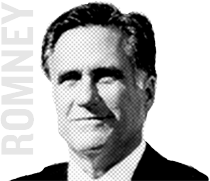
I commend the ONE campaign for bringing more attention to the plight of global poverty. Although many Americans rightly are concerned about our current difficulties here at home, our nation never turns a blind eye to human suffering abroad. As president, I will retool and refocus our foreign aid, so we can lift more people out of poverty and make our world more secure.
The biggest problem with our foreign aid strategies is that many of them are ineffective. Too often, our aid supplants work that is more effectively done by private enterprise and investment in other nations. Our aid should instead focus on building the institutions of liberty that will create lasting development and change.
I will focus U.S. assistance programs on encouraging free enterprise and promoting human rights. If developing nations build strong economies and durable institutions, this will foster enduring prosperity, and their ties with the United States will only strengthen.
In my administration, we will institute a new Prosperity Pact program that will use development dollars to channel the transformative power of increased trade and investment. Working with the private sector, we will identify barriers to foreign investment and trade in developing nations. And in exchange for removing them, we will offer those countries aid packages focused on developing the rule of law, property rights, and other institutions of liberty.
In addition, my administration will restore the promotion of free trade as a key priority of America's foreign policy. By negotiating more trade pacts with developing nations, we will create jobs here at home, reduce poverty abroad, and develop deep ties with our friends and allies. We will also build on the work of microfinance initiatives and support new financing structures for small- and medium-sized enterprises. Empowering SMEs will allow developing nations to reach the global market and create an enduring cycle of growth.
I will also reform what has become the antiquated organizational structure of our diplomatic and assistance agencies. The current structure of government that is charged with utilizing our soft power is spread across numerous agencies—a scheme that scrambles lines of authority, blurs priorities, and creates accountability gaps through which failures go unpunished and successes go unrecognized. I will begin a process of reorganization that will establish unified budgetary and directive authority under one official responsible for all diplomatic and assistance programs within a particular region. These will be designed to mirror the regional military combatant commands. This would improve coordination between our military and diplomatic agencies so that their missions reinforce each other, instead of working at cross purposes as is currently the case.
Finally, we will answer the call for humanitarian assistance. The PEPFAR program has saved millions of lives. And we must recognize that many of America's most effective development groups are faith-based. They will have no stronger partner than a Romney Administration, one that will not throw up roadblocks to their participation in important initiatives abroad to assist those in need.
If America does not lead, other countries will—and they may not share our interests or our values. Our assistance to developing countries, if used wisely, can encourage growth, promote freedom, and keep us safe. Our aid policy will be a priority in my administration, because I believe in a strong America. Our strength comes from many sources, and foreign assistance is one of them. As president, I will ensure that our aid programs are effective and that America remains strong.
~~~~~~~~~~
No difference at all, between these two men, right?