Re: NSA Chief Russia Hacked '16 Election Congress Must Inves
Posted: Wed Jun 21, 2017 10:40 am
catch up time with Felix Sater Senior Advisor to Donald Trump
Trump, Russia and a Shadowy Business Partnership
An insider describes the Bayrock Group, its links to the Trump family and its mysterious access to funds. It isn't pretty.
By Timothy L. O'Brien
138
June 21, 2017, 3:00 AM CDT
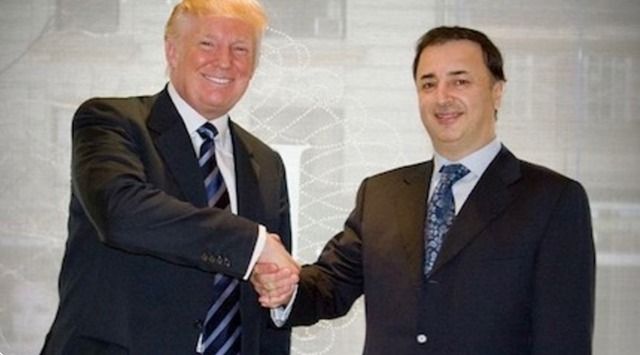
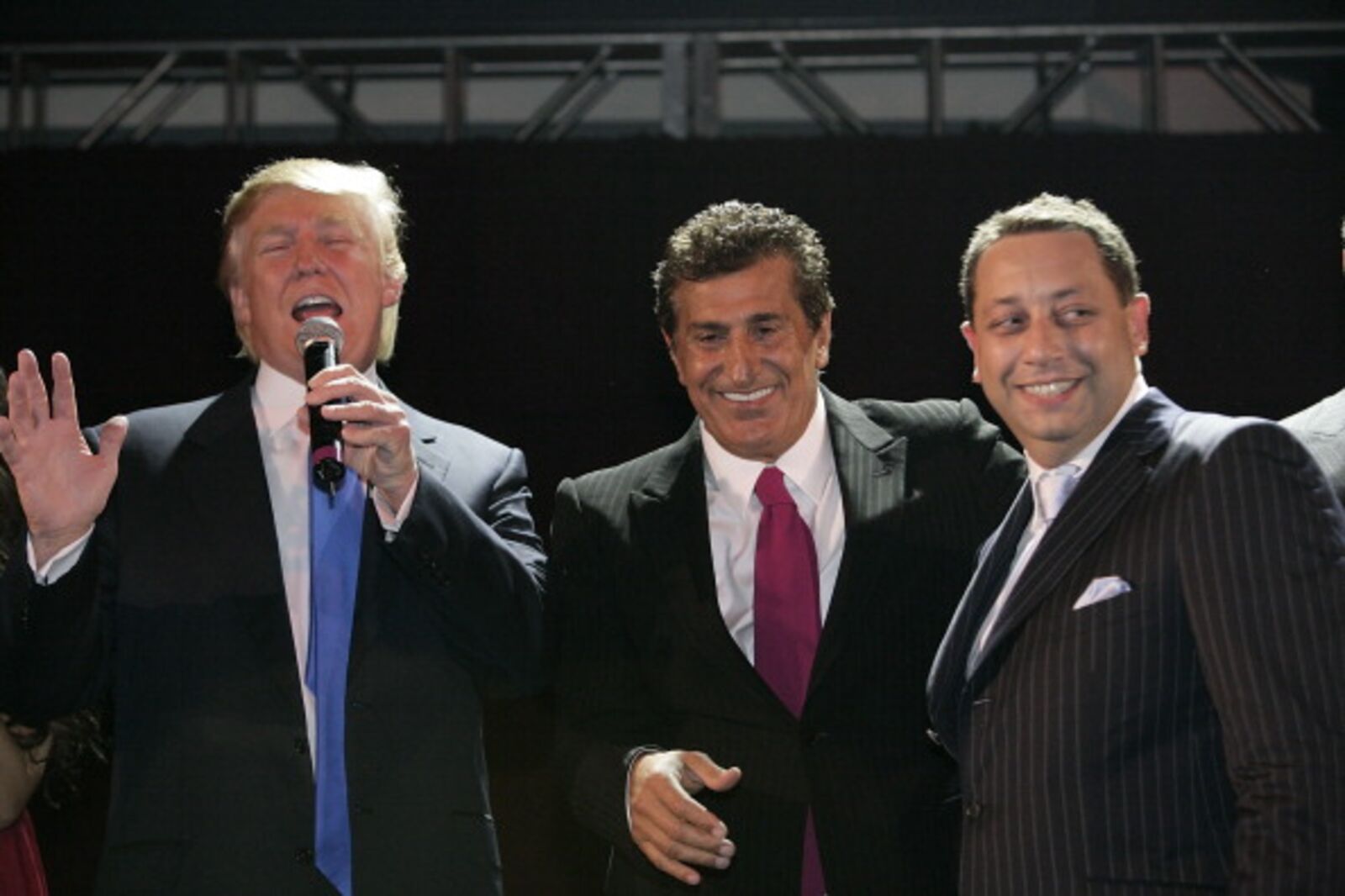
Trump, Arif and Sater, at right, Trump Soho launch party, 2007 Photographer: Mark Von Holden/WireImage
The special counsel’s investigation of the White House has come more sharply into focus.
Robert Mueller is examining whether President Donald Trump obstructed justice when he fired James Comey as director of the Federal Bureau of Investigation, the Washington Post recently reported. As we've heard for months now, there is also a probe of possible collusion between Trump's campaign team and the Kremlin to tilt the 2016 election in the president's favor.
But the Justice Department inquiry led by Mueller now has added flavors. The Post noted that the investigation also includes "suspicious financial activity" involving "Russian operatives." The New York Times was more specific in its account, saying that Mueller is looking at whether Trump associates laundered financial payoffs from Russian officials by channeling them through offshore accounts.
Trump has repeatedly labeled Comey's and Mueller's investigations "witch hunts," and his lawyers have said that the last decade of his tax returns (which the president has declined to release) would show that he had no income or loans from Russian sources. In May, Trump told NBC that he has no property or investments in Russia. "I am not involved in Russia," he said.
But that doesn't address national security and other problems that might arise for the president if Russia is involved in Trump, either through potentially compromising U.S. business relationships or through funds that flowed into his wallet years ago. In that context, a troubling history of Trump's dealings with Russians exists outside of Russia: in a dormant real-estate development firm, the Bayrock Group, which once operated just two floors beneath the president's own office in Trump Tower.
Bayrock partnered with the future president and his two eldest children, Donald Jr. and Ivanka, on a series of real-estate deals between 2002 and about 2011, the most prominent being the troubled Trump Soho hotel and condominium in Manhattan.
During the years that Bayrock and Trump did deals together, the company was also a bridge between murky European funding and a number of projects in the U.S. to which the president once leant his name in exchange for handsome fees. Icelandic banks that dealt with Bayrock, for example, were easy marks for money launderers and foreign influence, according to interviews with government investigators, legislators, and others in Reykjavik, Brussels, Paris and London. Trump testified under oath in a 2007 deposition that Bayrock brought Russian investors to his Trump Tower office to discuss deals in Moscow, and said he was pondering investing there.
"It's ridiculous that I wouldn't be investing in Russia," Trump said in that deposition. "Russia is one of the hottest places in the world for investment."
One of Bayrock's principals was a career criminal named Felix Sater who had ties to Russian and American organized crime groups. Before linking up with the company and with Trump, he had worked as a mob informant for the U.S. government, fled to Moscow to avoid criminal charges while boasting of his KGB and Kremlin contacts there, and had gone to prison for slashing apart another man’s face with a broken cocktail glass.
In a series of interviews and a lawsuit, a former Bayrock insider, Jody Kriss, claims that he eventually departed from the firm because he became convinced that Bayrock was actually a front for money laundering.
Kriss has sued Bayrock, alleging that in addition to laundering money, the Bayrock team also skimmed cash from the operation, dodged taxes and cheated him out of millions of dollars. Sater and others at Bayrock would not comment for this column; in court documents they have contested Kriss's charges and describe him, essentially, as a disgruntled employee trying to shake them down.
Jody Kriss in a luxury unit in a building he is developing in New YorkPhotographer: Jeff Brown for Bloomberg
But Kriss's assertion that Bayrock was a criminal operation during the years it partnered with Trump has been deemed plausible enough to earn him a court victory: In December, a federal judge in New York said Kriss's lawsuit against Bayrock, which he first filed nine years ago, could proceed as a racketeering case.
(I have my own history in court with the president. Trump sued me in 2006 when I worked at the New York Times, alleging that my biography, “TrumpNation,” had misrepresented his business record and his wealth. Trump lost the suit in 2011; my lawyers deposed him and Sater during the litigation. Trump's representatives didn't respond to repeated interview requests for this column.)
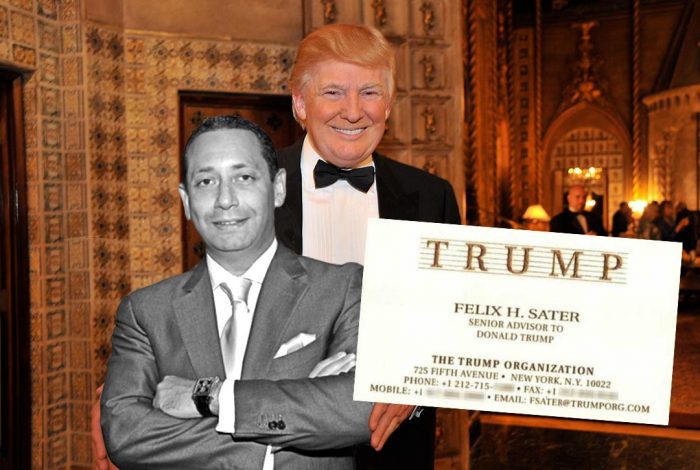
Trump has said over the years that he barely knows Sater. In fact, Sater -- who former Bayrock employees say met frequently with Trump in the Trump Organization's New York headquarters, once shepherded the president's children around Moscow and carried a Trump Organization business card -- apparently has remained firmly in the orbit of the president and his closest advisers.
Sater made the front page of the New York Times in February for his role in a failed effort — along with Trump’s personal attorney, Michael Cohen — to lobby former National Security Adviser Michael Flynn on a Ukrainian peace proposal.
Comey was still Trump's FBI director when he testified before the House Intelligence Committee in March about Russian interference in the 2016 election. During that hearing, Comey was asked if he was "aware of" Felix Sater, his criminal history and his business dealings with the Trump Organization. Comey declined to comment.
It's unclear whether Sater and Bayrock are part of Mueller's investigation. But Mueller has populated his investigative team with veteran prosecutors expert in white-collar fraud and Russian-organized-crime probes. One of them, Andrew Weissmann, once led an FBI team that examined financial fraud leading to the demise of Enron. Before that, Weissmann was a prosecutor with the U.S. attorney's office in Brooklyn and part of a team that prosecuted Sater and mob associates for investment scams in the late 1990s.
However the Mueller probe unfolds, a tour of Trump's partnership with Bayrock exposes a number of uncomfortable truths about the president's business history, his judgment, and the possible vulnerabilities that his past as a freewheeling dealmaker — and his involvement with figures like Sater — have visited upon his present as the nation's chief executive.
Zegna Suits and Luxury Cars
Sater was born in the Soviet Union in 1966 and emigrated with his parents to the heavily Russian enclave of Brighton Beach, Brooklyn, when he was about eight years old. He attended Pace University before dropping out when he was 18, then found his way to Wall Street where he worked as a stockbroker.
His early years on Wall Street, according to the recollections of his one-time business partner, Salvatore Lauria, were flush. By his mid-20s, Sater was collecting expensive watches, spending thousands of dollars on Zegna suits and buying luxury cars. That all came to a brief halt in 1993 when he was sent to prison for using the stem of a broken margarita glass during a bar fight two years earlier to attack another stockbroker; Sater’s victim needed 110 stitches to hold his face together.
When Sater emerged from prison 15 months later, he found his way back into trouble. With a group that included Lauria (who admits to having had ties to organized crime figures and grew up in New York as a close friend of a prominent Mafia boss), Sater opened an investment firm on the penthouse floor of 40 Wall Street, a Trump-owned building in Manhattan. From there, according to federal prosecutors, Sater and his team set about laundering money for the mob and fleecing about $40 million from unwitting and largely elderly investors, a number of whom were Holocaust survivors.
By the time law enforcement authorities eventually caught on to the 40 Wall Street operation, Sater had fled to Russia. Lauria visited him there.
Sater "was always hustling and scheming, and his contacts in Russia were the same kind of contacts he had in the United States," Lauria wrote in a 2003 memoir, "The Scorpion and the Frog." "The difference was that in Russia his crooked contacts were links between Russian organized crime, the Russian military, the KGB, and operatives who played both ways, or sometimes three ways."
Sater, who had been charged with racketeering and money laundering by the U.S. attorney's office in Brooklyn in connection with the 40 Wall Street scam, eventually decided to return to America and face those charges. He had a card to play, however: his knowledge, gleaned from contacts in Russia, about a small stock of Stinger antiaircraft missiles loose on the black market in Afghanistan that were of interest to U.S. intelligence officials.
"We were hoping for a free ride or a get-out-of-jail-free card for our crimes on Wall Street," Lauria wrote of Sater's maneuvering with U.S. officials.
Sater told authorities that he could use his Russian contacts to buy the Stingers and, according to court filings in Kriss's lawsuit and other accounts, a deal was struck in December, 1998. Sater pleaded guilty to federal fraud charges and then entered into a cooperation agreement with the government that sealed court records in the case and allowed his sentencing to be postponed for 11 years. (Sater would ultimately only pay a $25,000 fine and never go to prison.)
Many years later, as part of her confirmation hearings to become President Barack Obama's attorney general, Loretta Lynch would note that the cooperation deal she made with Sater when she was the U.S. attorney in Brooklyn lasted for a decade -- from 1998 to 2008 -- and that Sater gave the government "information crucial to national security and the conviction of over 20 individuals, including those responsible for committing massive financial fraud and members of La Cosa Nostra."
At some point after becoming an informant, Sater also recast himself as a real-estate savant. He made his way to a Manhattan real-estate investment firm, APC Realty, where he raised money for deals and where he met Kriss in 2000.
Kriss, a native of Miami and a business graduate of the Wharton School at the University of Pennsylvania, was an aspiring real-estate developer who was in his early 20s when they met. He says he was initially captivated by Sater.
“Felix knew how to be charming and he knew how to be brutally nasty,” says Kriss. “He has a talent for drawing people in. He has charm and charisma. But that’s what con men do.”
After APC began to fall apart in 2002, Kriss decided to strike out on his own back home in Miami, doing real-estate deals. Sater made his way to a small Hong Kong investment bank that used him as a New York-based rainmaker for real-estate deals.
In addition to his new life as a real-estate investor and government informant, Sater owned a comfortable home in Sands Point, Long Island, a toney New York suburb that was a setting for “The Great Gatsby.” He also had a wife and three daughters and was a member of an Orthodox synagogue in neighboring Port Washington. On one occasion Sater brought his rabbi with him to meet U.S. intelligence officials in New York, where, the rabbi said, agents praised Sater's service to the country.
When Sater received a community service award at his synagogue on another occasion, a band played "Hail to the Chief." Sater gave an acceptance speech in which he noted that he was "not a very religious person" but that his goal in life was to "repair the world or make it a better place."
'Air of Success'
About a year after the terrorist attacks of Sept. 11, 2001, Sater joined Bayrock, a company that marketed itself as a property developer and had opened Manhattan offices on the 24th floor of a well-known building at 725 Fifth Avenue: Trump Tower.
In late 2002, Sater phoned Kriss and invited him to consult at Bayrock, bragging about a deep-pocketed investor, Tevfik Arif, who was partnering with him in search of bigger deals.
Arif, born in Kazakhstan, was a former Soviet official who had relocated to Turkey to make his fortune. He ran several upscale, seaside hotels there that catered almost exclusively to Russians, according to Kriss, and he had also redeveloped a shopping center in Brooklyn. At one point in his post-Soviet years, Arif also reportedly took over a former Kazakh state-owned chromium producer with his brother.
Like Sater, Arif had a home in Sands Point and Kriss says that Arif brought his children there from Turkey to learn English. (Arif's representatives declined to respond to a list of questions about his business history, including how he met Sater and brought him to Bayrock, citing ongoing litigation.)
Bayrock was initially funded, in part, with a $10 million investment transferred to the firm by Arif's brother in Russia, who, according to Kriss's lawsuit, was able to tap into the cash reserves of a Kazakh chromium refinery. (A spokeswoman for Arif declined to comment on that allegation.)
A marketing document Bayrock once circulated to prospective investors noted that Alexander Mashkevich, an oligarch born in the former Soviet Union, was one of Bayrock's primary sources of funding. Mashkevich's firm, the Eurasian Natural Resources Corporation, was based in Kazakhstan and elsewhere and had interests in chromium, aluminum, coal, construction, and banking. (A person close to Mashkevich, who requested anonymity because of the Kriss-Bayrock litigation, said Mashkevich never invested in Bayrock.)
Bayrock never seemed to be short of money, however. According to Kriss’s lawsuit, the team running the little development firm in Trump Tower could locate funds "month after month, for two years, in fact more frequently, whenever Bayrock ran out of cash." If times got tight, Bayrock's owners would "magically show up with a wire from 'somewhere' just large enough to keep the company going."
Kriss says that Sater and Arif wooed him to Bayrock by offering him 10 percent of the firm's profits. Bayrock’s Trump Tower offices gave “an air of success to it,” Kriss says. Bayrock also gave Kriss, then 28 years old, the opportunity to work with Trump.
It was Sater who initially developed the relationship with Trump, according to Kriss and court records from Trump's lawsuit against me. Sater had made the acquaintance of three Trump Organization executives who then introduced him to their boss. When the Bayrock team met Trump in 2002, the future president was enduring a long stretch in the financial wilderness, having narrowly escaped personal bankruptcy in the early 1990s.
He eventually emerged from that mess as a pariah among big banks. He was also a determined survivor and tireless self-promoter and he parlayed those skills into recreating himself as a branding machine and golf course developer in the late 1990s and early 2000s.
Kriss says that it was Arif and Sater who pitched the future president on the idea of launching an international chain of Trump-branded, mixed-use hotels and condominiums. And Bayrock got to Trump at a time when his “brand” could help get a little extra attention for a condo project, but didn’t amount to much more than that.
“Trump was trying to build his brand and Bayrock was trying to market it,” Kriss recalls. “It wasn’t clear who needed each other more. This was before the show, remember.”
The “show,” of course, was “The Apprentice.” It aired for the first time on Jan. 8, 2004, and became a sensation that vaulted Trump into reality TV stardom. In the real world, Trump's casinos were faltering. But on reality TV, Trump posed as a successful leader and dealmaker who embodied a certain kind of entrepreneurial flair and over-the-top billionairedom -- an impression that stuck with tens of millions of TV viewers.
The popularity of "The Apprentice" also gave the Bayrock-Trump partnership added zing.
“That put Bayrock in a great position once the show debuted,” Kriss says. “The show did it for Trump, man. Nobody was interested in licensing his name before that.”
The hook at Bayrock, for Trump, was an 18 percent equity stake in what became the Trump Soho hotel, a steady stream of management fees on all Bayrock projects and the ability to plaster his name on properties without having to invest a single dollar of his own.
The Trump SoHoPhotographer: Drew Angerer/Getty Images
It’s not clear how carefully Trump vetted his Bayrock partners. But his lack of concern about their backgrounds – and the potential risk to his own reputation from dealing with them - was part of a pattern. In Atlantic City, he had partnered with men with organized crime ties. Later, he and his children struck deals in Brazil and Azerbaijan with partners who had murky backgrounds or unusual legal entanglements.
Sater said in court filings that he disclosed his securities fraud conviction to members of the Trump Organization. He assumed they had told Trump, but he wasn't sure.
"It's not very hard to get connected to Donald if you make it known that you have a lot of money and you want to do deals and you want to put his name on it," Abe Wallach, who was the future president's right-hand man at the Trump Organization from 1990 to about 2002, told me in an interview. "Donald doesn't do due diligence. He relies on his gut and whether he thinks you have good genes."
Given Arif's halting English, it was Sater and Kriss who interacted most frequently with the Trump family—and Sater the most often with Trump himself. Kriss says that most of his own contacts were with the elder Trump children, Don Jr. and Ivanka, and included drafting contracts and occasional nights on the town.
While Trump’s kids were involved in the back-and-forth with Bayrock, it was Trump himself who always had the final say.
“Donald was always in charge,” says Kriss. “Donald had to agree to every term of every deal and had to sign off on everything. Nothing happened unless he said it was okay to do it. Even if Donald Jr., shook your hand on a deal, he came back downstairs to renegotiate if his father told him to.”
The Trumps, Kriss says, saw Sater "frequently" and valued the relationship because “Felix demonstrated that he was loyal to them.” He says that at one point Sater was meeting with the future president in his Trump Tower office multiple times a week. Sater, according to a later court deposition, said that his business conversations with Trump in that office were wide-ranging and frequent — “on a constant basis."
The pair had what Sater described as "real-estate conversations," and they talked about "gathering intelligence, gathering know-how, general market discussions," and also chatted about using Sater's Russian connections to build a "high-rise, center of Moscow” that would be a “great opportunity, megafinancial home run."
Although Sater socialized with Trump, "I wouldn't call him my friend," he said in the 2008 deposition. Still, Sater said he traveled with Trump to look at deals and was proud of Bayrock's relationship with the famous developer. "Anybody can come in and build a tower," he said. "I can build a Trump Tower because of my relationship with Trump."
Bayrock and the Trumps then began laying the groundwork for domestic and international hotel-condo projects, eventually exploring deals in Turkey, Poland and Ukraine. Sater escorted Ivanka and Don Jr. on a trip to Moscow, where they looked at land for a Trump-branded hotel.
None of those overseas projects got past the planning stages. In the U.S., Bayrock and Trump projects moved forward haltingly.
In Phoenix, a one-story mall that Bayrock bought out of bankruptcy was meant to be the site of a Trump-branded tower. It became ensnared in zoning debates and then the national real-estate downturn and never got built.
Sater's dealings in Phoenix later landed him in court with a local developer who had invested in the Phoenix project, Ernest Mennes. Mennes said in a lawsuit that when he threatened to reveal Sater's criminal record, Sater told him that he would have a cousin "electrically shock Mr. Mennes’ testicles, cut off Mr. Mennes’ legs, and leave Mr. Mennes dead in the trunk of his car."
In Mennes's suit against Bayrock and Sater, he alleged that Sater also skimmed money from the Phoenix development. Bayrock and Sater settled the suit (which was later sealed and its terms left undisclosed; Sater's lawyer, in an interview with ABC News, denied Mennes's allegations).
The next project Trump and Bayrock pursued was the Trump International Hotel and Tower, a mixed-use hotel and condominium in Fort Lauderdale, Florida. Announced in 2005, it later went into foreclosure.
The third and final major project Bayrock and Trump worked on together was their most high-profile effort, the 46-story Trump Soho hotel in lower Manhattan.
Trump, Sater and Arif were all photographed together at a splashy launch party for the Trump Soho in 2007. Trump also pitched the Trump Soho on an episode of "The Apprentice," promising that "this brilliant, $370 million work of art will be an awe-inspiring masterpiece."
Helping Trump and Bayrock fund that masterpiece was a fresh influx of money from an Icelandic investment bank called the FL Group. Sater and Lauria, his longtime mob associate, had jointly recruited FL, introducing the firm to Bayrock and the Trump Organization. (I’ll have more on the FL Group and Bayrock in a future column; the firm's former leaders, one of whom was later convicted of tax and accounting fraud, declined to comment or did not respond to interview requests for this column.)
Yet again, the Trump Organization — even though it signed off on the FL investment — appeared to care little about vetting a firm that came into the partnership through Sater. FL operated in a country with a porous, vulnerable banking system, and some investigators who scrutinized other Icelandic banks at the time said they suspected those banks of being conduits -- unwitting or otherwise -- for dirty funds from outside Iceland. (The FL Group collapsed a little over a year after it invested in Bayrock. The firm itself was never prosecuted; the leaders of a number of other Icelandic banks were prosecuted or jailed for crimes including money laundering).
Kriss said in an interview that an Icelandic competitor of the FL Group also contacted him to invest in Bayrock. When he took that offer to Sater and Arif they told him, he says, that the money behind Icelandic banks “was mostly Russian” -- and that they had to take FL’s funds for deals they were doing with Trump because the investment firm was “closer to Putin."
“I thought it was a lie or a joke when they said Putin,” Kriss recalls. “I didn’t know how to make sense of it at all.”
(Kriss says he doesn't have financial records showing that Russian President Vladimir Putin had a connection to the FL Group and that his own knowledge is purely anecdotal. A Kremlin spokesman said via email that Putin had no connection to the FL Group or Bayrock.)
'Somebody Said That He Is in the Mafia'
Kriss says that in the wake of the FL deal he was owed a payout that could have ranged from about $4 million to $10 million, but that Bayrock reneged. When he persisted, he claims, Sater threatened him.
So Kriss says he accepted a $500,000 payment instead and then eventually quit. Sater, as it turns out, didn’t have much time left at Bayrock either.
In December, 2007 the New York Times published an article detailing some of Sater’s past run-ins with the law and some of his ties to organized crime (the article also noted that Sater had begun using “Satter” as an alternate spelling for his last name so he could try to “distance himself from his past” if people Googled him).
Two days after the Times story ran, Trump sat for a deposition with my attorneys as part of the libel lawsuit he had filed against me for “TrumpNation.” They asked him whether he planned to sever his relationship with Sater because of Sater's organized crime ties. Trump said he hadn't made up his mind.
"Have you previously associated with people you knew were members of organized crime?" one of my lawyers asked.
"No, I haven't," Trump responded. "And it's hard to overly blame Bayrock. Things like that can happen. But I want to see what action Bayrock takes before I make a decision." (In fact, Trump had partnered in the past in Atlantic City's real-estate business with men he knew were mobbed up.)
Whenever he was asked in later years about his relationship with Sater, Trump routinely misrepresented it as distant. In a 2013 deposition taken as part of litigation surrounding Trump and Bayrock’s failed Fort Lauderdale project, Trump was asked again about his partnership with Sater.
"He was supposedly very close to the government of the United States as a witness or something," Trump said. "I don't think he was connected to the Mafia. He got into trouble because he got into a barroom fight."
"I don't know him very well," Trump added, saying that he hadn't conversed very often with Sater. "If he were sitting in the room right now I really wouldn't know what he looked like."
Trump also said that he didn't think that questions about Sater’s background meant that he should have ended his business partnership with him: “Somebody said that he is in the Mafia. What am I going to do?”
Shortly after my lawyers asked Trump about Sater, Bayrock began discussing the best way for him to resign, according to company email and court records. By 2008, Sater had left the firm.
The Trump Soho ended in failure. It opened in 2010, but many units failed to sell and early condo purchasers sued Bayrock and the Trumps. Three years later, the Trump Soho went into foreclosure with most of its units still unsold, and a new company took control of the property. Bayrock hasn’t done another deal since then. (A spokeswoman for Bayrock attributed the failures of the Trump partnerships to fallout from the 2008 financial meltdown.)
'He Seems to Have Unlimited Funds'
After Kriss left Bayrock, he set up his own development firm in New York and then sued Sater, Arif, Trump and Bayrock in Delaware in 2008, alleging that Bayrock was a criminal enterprise and demanding to be paid in full for his work there.
When the case moved to New York in 2010, it came with a twist. Sater had left a copy of his cooperation deal with the government – the one dating back to his Stinger missile and mob informant days – on the hard drive of his Bayrock computer. A Bayrock employee leaked it to Kriss’s attorney, who promptly filed it as an exhibit in court.
Trump was eventually dropped from the case and Sater began carpet-bombing Kriss with his own lawsuits, ultimately filing several separate actions that claimed, among other things, that Kriss has used the courts to prosecute him maliciously.
Sater also apparently kept busy outside of the courtroom.
Kriss says that about three years ago he started receiving threatening email from websites carrying versions of his name (“JKrissInfo.com,” for example). He soon discovered there were hundreds of other new websites that also contained false, disparaging information about him.
Kriss sued the anonymous authors of the websites for defamation and when the court ruled in his favor he was able to get a large portion of the sites delisted from Google. He says he also was able to use the court order to untangle the provenance of the websites, discovering that their registration tracked back to Sater’s home address in Sands Point.
Kriss says that goons once showed up at real-estate developments he was overseeing in Brooklyn, asking his employees if they knew the true story about their boss. Waves of letters questioning his bona fides have arrived at his office and in the mailboxes of every resident in two separate buildings where Kriss kept apartments.
Kriss says investors in his new company, East River Partners, have stood by him, but he's worried that Sater's digital vendetta may be hard to overcome. His new lawyer, Bradley D. Simon, says that he's mystified by how Sater has managed to stay afloat all these years.
“Sater was a cooperating witness for the Eastern District of New York and he continued going on a crime rampage,” says Simon. “He’s filed all kinds of frivolous lawsuits, but that’s what he does. He seems to have unlimited funds.”
For his part, Sater continues to wear many hats. A couple of years after he left Bayrock, the Trump Organization hired him briefly as a consultant to prospect for real-estate deals, giving him company business cards with his name engraved on them.
More recently, Sater got enmeshed in litigation again, this time around the sale of an Ohio shopping mall -- and the alleged disappearance of tens of millions of dollars -- in a court case that was settled in 2013.
Clear thinking from leading voices in business, economics, politics, foreign affairs, culture, and more.
Share the View
Sign Up
Sater has also entered into a war of words with his former Bayrock partner, Tevfik Arif. Sater claims, according to a recent article in the Wall Street Journal, that Arif owes him money -- and that if he isn't paid he'll publicize what he describes as Arif's ties to organized crime and to tainted dealings in Kazakhstan’s metals business. (A Bayrock spokeswoman says that Sater's claims about Arif are baseless.)
Meanwhile, Trump is mired in a probe that now pivots off sensitive topics for him and his family: their money, their deals and Russia – all of which will test his promise to testify under oath to Mueller and his investigators.
https://www.bloomberg.com/view/articles ... at-bayrock
How Felix Sater — Former Mob-linked Hustler And Ex-Trump Adviser — Sought To ‘Protect’ Ukraine’s Nuclear Plants
May 25, 2017 3:10 pm
How Felix Sater — Former Mob-linked Hustler And Ex-Trump Adviser — Sought To ‘Protect’ Ukraine’s Nuclear Plants
The saga of Felix Sater — a twice-convicted one-time Mafia associate, real estate developer, sometime partner and former “senior adviser” to Donald Trump — continues to grow more complicated and bizarre. Details have now emerged of a second attempted diplomatic intervention by Sater, supposedly to prevent a possible nuclear power plant conflagration in Ukraine.
In a recent investigation for DC Report, (reprinted here by The National Memo), I explored a series of controversial financial transactions that involved Sater and another former Trump Organization associate named Daniel Ridloff, which involved accusations that the two men had absconded with nearly $43 million from the sale of an Ohio shopping mall to Neil Bush, son and brother of the former presidents.
While that case was settled (with Sater and Ridloff receiving roughly half of the contested money), and there was no evidence implicating Trump in those transactions, the president’s business appears to have benefited from them. Several condominiums in his troubled Trump Soho building were purchased with $3.1 million in cash that may have come from the same sources, with roots in Kazakhstan. Investigators have long suspected that figures seeking to hide illicit cash have used Trump businesses, including his casino and real estate holdings, whether or not Trump or his executives were cognizant of such suspicious transactions.
Aside from Sater’s criminal past, which was cited by Trump critics during the 2016 election, he drew front-page attention last February, just one week before Michael Flynn resigned as national security adviser over his concealed discussions with the Russian ambassador, when news outlets revealed that Sater had hand-delivered a Kremlin “peace proposal” for Ukraine to Flynn’s office. The proposal suggested a way that President Trump could lift sanctions against Russia as part of a negotiated settlement
between Kiev and Moscow.
Behind that proposition, according to the New York Times, were the Russian-born Sater; Michael Cohen, the president’s personal lawyer; and Andrii Artemenko, a Ukrainian parliament member leading a political opposition movement that was forged in part by former Trump campaign manager Paul Manafort.
According to the Times, Sater, Cohen and Artemenko met in January in private conference rooms and the restaurant bar at New York’s Regency hotel to discuss the plan before it was delivered to the White House.
Now I have learned that Sater and Artemenko met last October 7 for breakfast at the St. Regis Hotel in New York to discuss another major problem in Ukraine: Its aging cohort of nuclear power plants, which may pose safety risks as grave as the 1986 Chernobyl disaster. The meeting was convened a month before the U.S. presidential election. Sater declined to comment and Artemenko — whose parliamentary status and citizenship were revoked by the Ukraine government after the “peace plan” fiasco –could not be reached.
Evidently Sater and Artemenko were seeking the assistance of a third person who attended the breakfast, Robert Armao — a well-connected international businessman who served as labor counsel to the late Vice President Nelson Rockefeller in the early 1970s. Armao says that Sater, whom he’d never met or spoken with prior to last fall, reached out to him through a mutual friend.
“He said that Artemenko was in Washington meeting with members of Congress because of the worldwide effort to deal with nuclear power plants in Ukraine,” recalls the former Rockefeller aide. “Many are falling apart, like at the Chernobyl-level, and the plants need to be refurbished.”
Armao was invited to the New York meeting because he’s a longtime expert on Ukraine. He says he once advised individuals who were working with former Ukrainian president Viktor Yushchenko during the Orange Revolution protests of 2004-2005. During the October 7 breakfast, Armao says he was asked whether he could intercede with Ukraine’s current energy minister in an attempt to revive a contract that Kiev had signed with South Korea to bring the nuclear plants up to global standards.
Armao has also enjoyed close dealings in the past with the government of the Republic of Korea, he says, and has done business there for decades. “I said, have you officially asked [the Ukraine energy minister]?,” recalls Armao, but “[Artemenko] was sketchy on that. I told Sater and Artemenko that I’d find out what’s going on.”
According to Armao, he reached out to sources and learned that the Ukrainian government was “in discussion with the Koreans and all was under control. So that was it.”
In fact, just five weeks before the breakfast meeting, Korea’s state-controlled nuclear power utility reached an agreement with Ukraine to resume construction of two reactors. But it’s unclear whether that deal involves the servicing of the existing reactors that apparently concerned Sater and Artemenko.
Armao admits that he was impressed by the former Trump associate. “When you talk to the guy, he wants to save the world. He said, ‘You know, [Ukrainian nuclear plant safety] is a big Washington concern.’ I do say, the man is brilliant. You sit with him, he talks about real estate, he talks about everything. And he can charm the pants off you, Sater.”
Not always, perhaps. In 1993, Sater served a year in prison for stabbing a man in the face with a margarita glass during a bar fight. In 1998, he pleaded guilty to racketeering as part of a mafia-driven “pump-and-dump” stock fraud and then escaped jail time by becoming a highly valued government informant. From 2002-2008, he ran the day-to-day operations for Bayrock Group, one of Trump’s biggest real estate development partners during that period. (In his current Linked-In bio, he refers to himself as Bayrock’s co-founder and vice-chairman.) The Bayrock offices were located a floor below Trump’s own office in the Trump Tower. In 2010, Sater was given an office down the hall from Trump and made his “Senior Advisor.”
Sater and Trump have been doing an odd dance around each other during the past few years, regarding how much they’ve interacted. Trump consistently has testified in civil cases that he barely knew Sater, barely dealt with him and “wouldn’t recognize him if he was sitting in this [deposition] room.” However, Sater, in a different civil case, testified that he would often pop his head into Trump’s office to give him updates on a Moscow hotel deal they had in the works. (It doesn’t appear that project ever came to fruition.) Last September, I half-joked to Sater that he must have a photo album filled with pictures of himself with Trump. “A photo album?” he responded. “How about six!”
The Trump-Sater relationship is likely to receive sharp scrutiny soon in Washington, both in Congressional probes and perhaps even by special counsel Robert Mueller, who will investigate possible collusion between Russia officials and the Trump campaign in the 2016 election.
In late March, then-FBI director James Comey was asked about Sater’s relationship with the FBI when he appeared before the House Intelligence Committee. Comey declined to comment, presumably because Sater spent a decade as a secret government cooperator for both the FBI and at times, the CIA. But in 2015, during her confirmation hearing for the post of U.S. Attorney General, Loretta Lynch offered a teaser. In response to a written question about Sater by Senator Orrin Hatch, she stated that his [decade-long] assistance as a federal cooperator was “crucial to national security.”
For national security reasons, it is now crucial that the public learn all the details of Sater’s work for the government– and much more.
http://www.nationalmemo.com/felix-sater ... ar-plants/
Senate Russia investigators promised access to key Treasury data
By Tom LoBianco, CNN
Updated 1:21 PM ET, Tue June 20, 2017
Sen. Ron Wyden had placed a hold on a Trump's Treasury nominee for the files
The Senate took a procedural step Tuesday by voting to advance the nomination
(CNN)Members of the Senate intelligence committee said Tuesday they were promised access to data from the Treasury Department's financial crimes unit, as they dig into potential ties between the campaign of President Donald Trump and Russian financiers.
"The stack of press reports gets higher every day regarding financial connections between Trump associates and Russia, and Trump's own business dealings with Russian interests," Sen. Ron Wyden, an Oregon Democrat on the committee told CNN. "This morning, Treasury briefed me on documents that are being transmitted to the Senate. I believe these documents will be sufficient to start following the money."
First on CNN: House Russia investigators get access to Treasury data
Wyden had placed a hold on Trump's nominee to oversee the Treasury Department's financial crimes unit, FinCEN, after seeking access to the data. He said Tuesday that he lifted that hold on Sigal Mandelker, the nominee.
The Senate took a procedural step Tuesday by voting to advance Mandelker's nomination.
Sen. Mark Warner, the top Democrat on the Senate intelligence committee, told CNN last month that Senate investigators requested access to documents from Treasury's FinCEN as they look for possible connections between Trump's aides and Russian banks and oligarchs.
FinCEN investigates money laundering and has previously examined violations by Trump's casinos.
http://www.cnn.com/2017/06/20/politics/ ... index.html
Laurence Tribe ✔@tribelaw
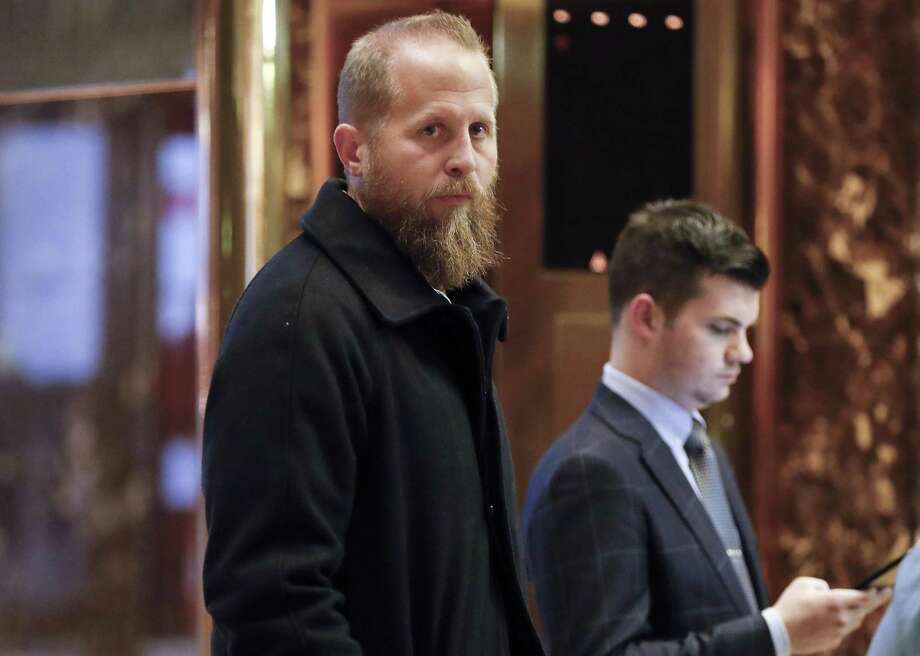
#Collusion watch: Trump/Russia link includes digital director Parscale of Trump's campaign, who may have helped Putin weaponize hacked info
Chuck Cooper Confirms: He's AG Jeff Sessions' Lawyer
Katelyn Polantz, The National Law Journal
June 20, 2017 | 0 Comments
Charles Cooper, second from right, sat behind his friend and client Jeff Sessions at the attorney general's Congressional testimony last week.
Photo: Diego M. Radzinschi/ALM
Charles Cooper, the well-known Republican lawyer, wasn't simply in attendance at U.S. Attorney General Jeff Sessions' congressional hearing one week ago to support his friend. Cooper is Sessions' personal lawyer, he confirmed in an email Tuesday.
Cooper didn't provide additional details on the nature of the representation—including whether it extends to the criminal inquiry into Trump campaign affiliates' involvement with Russia.
Peter Carr, a spokesperson for the Justice Department's investigation, declined to comment because the probe is ongoing. Spokespeople for Sessions didn't immediately respond to requests Tuesday.
Cooper's involvement isn't that surprising given his public appearance with Sessions on Capitol Hill. Lawyers typically consult counsel before testifying, so that they can prepare adequately.
Charles Cooper of Cooper & Kirk addressing the media after the U.S. Supreme Court heard arguments in a same-sex marriage case challenging California
Charles Cooper of Cooper & Kirk addressing the media after the U.S. Supreme Court heard arguments in a same-sex marriage case challenging California's Prop 8. March 26, 2013.
Photo by Diego M. Radzinschi/THE NATIONAL LAW JOURNAL.
But a continuing attorney-client relationship between the attorney general and a private lawyer could signal they expect additional perilous legal questions—including from Robert Mueller III's special counsel investigation.
Last month, 11 Democratic senators and the American Civil Liberties Union called for investigations into whether Sessions violated his recusal from the Russia investigation and committed perjury during his nomination hearings.
Cooper is a natural choice from outside the Justice Department to counsel Sessions. The two have been close for decades. Cooper, a former head of Main Justice's Office of Legal Counsel, has his own firm, Cooper & Kirk. Earlier in his career he was a partner at McGuireWoods and at Shaw, Pittman, Potts & Trowbridge.
He often handles appellate cases, such as his work defending California’s since-overturned gay marriage ban, Proposition 8. Earlier he represented the NRA's campaign finance fund in cases against Federal Election Commission regulations.
Cooper also counseled Sessions when the then-senator prepared for his attorney general confirmation hearings.
The Trump administration later considered Cooper for the solicitor general job. He withdrew from consideration in February, citing the Senate's questioning of Sessions.
“After witnessing the treatment that my friend Jeff Sessions, a decent and honorable man who bears only good will and good cheer to everyone he meets, had to endure at the hands of a partisan opposition that will say anything and do anything to advance their political interests, I am unwilling to subject myself, my family, and my friends to such a process," Cooper said upon withdrawing.
http://www.nationallawjournal.com/id=12 ... 0520165116
Jeff Sessions hires attorney whose connections suggest he’s trying to cut a deal against Donald Trump
By Bill Palmer
Updated: 7:10 pm EDT Tue Jun 20, 2017 | 2
Home » Politics
Attorney General Jeff Sessions has hired an attorney of his own, a sign of just how serious Donald Trump’s Russia scandal has become, and how many people it now threatens to take down. This makes Sessions the eleventh person in the Trump administration who is known to have hired an attorney in the scandal. But what stands out here is whom Sessions hired, and how he’s connected to the investigation itself.
Jeff Sessions has hired Charles Cooper as his attorney. But Cooper’s former colleague is Rachel Brand, who currently serves as the number three at the Department of Justice (link). With Sessions already having recused himself from the DOJ’s Trump-Russia investigation, and with Deputy Attorney General Rod Rosenstein in danger of having to do the same, it would leave Brand in charge of the investigation.
Although Brand and Cooper no longer work together, it would be difficult to imagine them wanting to be on opposite sides of the same investigation, particularly one this crucial and nation-defining. So it’s difficult to imagine that Cooper would be willing to represent Jeff Sessions in this matter, unless Sessions is planning to cooperate with the investigation – in which case it would be very easy to understand why Cooper has taken him on as a client.
But Jeff Sessions is facing multiple felonies (lying under oath, lying on his security clearance forms, plus whatever crimes he may have been plotting with the Russian Ambassador during the meetings he lied about). And the only way for him to gain himself any legal leniency for himself would be to flip on Donald Trump. So while there are different ways to interpret any given hiring, Sessions’ decision to hire Charles Cooper of all people – and Cooper’s willingness to take him on as a client – suggest that Sessions is aiming to cut a deal against Trump.
http://www.palmerreport.com/politics/je ... rump/3540/
FBI Hammered in Court for Pre-Election Records on Trump
June 20, 2017
WASHINGTON (CN) – Bashing the FBI for equivocating on whether it has pre-election records on President Donald Trump, a government-transparency group brought a federal complaint to spur action.
Ryan Shapiro filed the June 18 lawsuit in Washington with his group, Property of the People Inc., and with investigative reporter Jason Leopold.
The men say they faxed the FBI on March 16, 2017, a request under the Freedom of Information Act for any records dating back to June 14, 1946 — the day of Trump’s birth — to June 15, 2015.
With the FBI refusing to confirm or deny the existence of such records, Shapiro and Leopold appealed to the Office of Public Information. They say the OIP missed the 20-day window to respond, so a federal judge should intervene.
Calling the FBI’s silence improper, Shapiro and Leopold argue that Trump’s privacy interest is minimal, both as the president and his prior status as a celebrity real estate mogul.
“Additionally, Mr. Trump has further diminished his privacy interest by speaking publicly about contacts he has had with the FBI,” the complaint states. “For example, in an article describing his connections with organized crime, Mr. Trump told The Washington Post that he met with FBI agents in April 1981.”
Shapiro and Leopold also call the public interest in such records enormous, saying it “clearly outweighs any embarrassment [Trump] might suffer from his name being associated with FBI investigation.”
“The FBI has a statutory duty to investigate criminal conduct, and the existence or nonexistence of records about Mr. Trump prior to the election would indicate whether or not the FBI was as diligent in investigating Mr. Trump as it was of less prominent citizens,” the complaint states. “The FBI’s substantive law enforcement policy is also a matter of great public concern.”
More to the point, the men claim, the FBI has previously released responsive records in answer to previous requests, and some of those records even contained Trump’s name unredacted.
“The FBI has not only unreasonably withheld the responsive records, but has unreasonably refused to even confirm the existence of responsive records,” the complaint states.
In addition to the general request for records on Trump, Shapiro and Leopold also identified five FBI case numbers and asked for the associated files.
The FBI missed the deadline to respond to requests about three of those case numbers, while it issued what is known as a Glomar response for the other two, refusing to confirm or deny the existence of these records. When put to a simple Google search, however, those two file numbers produce an FBI memorandum about Trump dated 1981.
How the 5-page document became public is unclear. Leopold and Shapiro’s attorney Jeffrey Light said in a phone interview that his clients want to see the full files in case they contain more information about Trump.
A press release about the lawsuit from Operation 45, which is dedicated to the transparency and accountability of the Trump administration, claims the lawsuit will “shed new light on already known investigations linking Trump to organized crime and will provide new information about Trump’s engagements with the bureau.”
Shapiro, a historian who is working for his doctoral degree at the Massachusetts Institute of Technology, is a member of Operation 45, as is Light.
The attorney said access to the documents will also shed light on the FBI’s role and function.
“The goal is to find out over the years what the relationship with the FBI has been like, as well as to find out what the FBI’s priorities have been,” Light said.
A representative for the Justice Department declined to comment on pending litigation.
Attorney Light said the bureau’s Glomar response is inappropriate. “That’s why we’re suing,” Light said.
http://www.courthousenews.com/fbi-hamme ... rds-trump/